Wednesday, July 30, 2025

The Mars House

Natasha Pulley
Completed 7/30/2025, Reviewed 7/30/2025
4 stars

This was an intriguing look at Mars colonization, colonialism, and segregation.  It features a Martian colony founded by China about seven generations ago.  The early settlers were genetically modified to handle the temperature range, lesser gravity, and extra radiation they would experience living on the red planet.  Their descendants are called Naturals.  Newer immigrants who are not modified must contain themselves in body cages or submit to dangerous medical altering so that they don’t accidently pose a physical threat to the lighter, less dense Naturals.  This, of course, has political implications.  This physical modification scenario adds a dimension that I haven’t seen before in books like Red Mars and its sequels, Moving Mars, or even The Martian Chronicles.  I was impressed by Pulley’s handling of it and very satisfied by the Queer relationship from which this is all observed.  
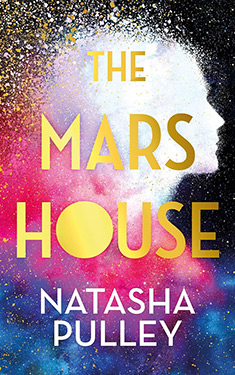
The book begins with January Sterling, a principal dancer at the Royal Ballet, nearly being swept away by torrential flooding in London.  He is given the option to emigrate to Mars as a refugee from the devastation that Earth has become.  He takes it, hoping for a better, safer life only to find that there he is an Earthstronger, a second-class citizen who can accidently kill a Natural just by bumping into one.  Bound to a body cage to slow down his actions, he goes about a manual labor job until strange circumstances put him in the path of a xenophobic politician running for Consul, i.e. leader of the colony.  January is given the choice to marry Senator Aubrey Gale or endure forced naturalization, which could kill him.  January takes the marriage offer only to find that Gale is kind and compassionate person.  January is forced to deal with this cognitive dissonance, trying to remain positive, and always wondering when Gale’s evil nature will appear.  Instead, they end up in a dangerous political battle with the present Consul as a massive months-long dust storm sweeps across the colony.

The book is told mostly from January’s POV.  He spends most of the book trying to feel out Gale, not knowing what to expect in this marriage, especially as the political rhetoric builds with the approaching elections.  I thought he had a great, albeit slow, arc as he finds out more and more about Gale.  His hesitancy and suspicions were very realistic.  I came to like the character, especially how he unexpectantly influences the people of Mars as the only Earthstronger ever to have media visibility.  Gale, too, was very likable, despite being mysterious and unreliable.  They both dance around each other, not wanting to express feelings while they still are uncertain of each other.  The emotional and sexual tension builds as they both learn about and from each other.  

Unexpectedly, my favorite part of the book was the introduction of giant mammoths.  They are much larger than normal because they too have been engineered to survive on Mars, and like the seven-foot-tall Naturals, they have grown much larger than expected.  Gale’s sibling River had found a way to communicate with the mammoth.  When Gale needs help from the mammoths, they use River’s invention, and the scene is absolutely wonderful.  I believe this is the third mammoth related book I’ve read this year.  I think I have a major fondness for them now.  

I had a tough time staying on track with this book.  It had a rather slow pace, exacerbated by January’s hesitancy and suspicions.  His inner monologue was dry at times.  Of course, all the sexual and emotional tension between January and Gale had me thinking, “Just kiss already!”  But I think Pulley handled it very well.

I was very impressed by the handling of Mars as a genderless society.  As January falls for Gale, there’s a moment when he wishes he was sure of Gale’s gender, but it becomes irrelevant as their feelings for each other grow.  And there are terrific scenes with a three-year-old Earthstronger boy named Yuan whom the two informally adopt during the dust storm, even before they express their feelings for each other.  It’s so heartwarming, and not a bit saccharine.  

I give this book four stars out of five.  My only complaint is the pacing, but everything else about it is marvelous.  I actually enjoyed the politics and the mysteries of the colony.  This book was published last year and if I had read it, I probably would have nominated it for this year’s Hugo awards.

Monday, July 21, 2025

Death of the Author

Nnedi Okorafor
Completed 7/21/2025, Reviewed 7/21/2025
5 stars

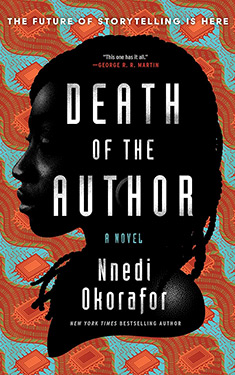
This book took my breath away.  I was completely engrossed in it and almost cried at the end.  I’ve read quite a bit of Okorafor’s works:  Who Fears Death, the Binti series, and the Akata series.  They range from good to amazing.  This is one of the amazing ones.  It’s a novel within a novel.  It follows Zelu, a disabled Nigerian American in her journey as an author, and the robots and AIs after the end of humanity.  At first, I was disturbed by the main character’s self-destructive nature, but between her life and that of the characters in her book, I became totally immersed in both.  Not only is it a sort of meta-genre book, but it provides intense scrutiny of the writing and publishing industry and a hope for the triumph of art.  This book is on my awards watch-list for next year’s Hugos.

The book begins with Zelu’s failed life as a writer and adjunct professor.  From somewhere deep inside comes a science fiction novel called Rusted Robots.  It thrusts her into literary superstardom.  It causes inner conflict for her as well as major conflict for her mostly traditional Nigerian family.  They’ve always seen her as a failure compared to her parents’ and siblings’ careers.  And the Nigerian people look down on physical, mental, and emotional disabilities as something to be mocked and seen as a personal failure.  Very slowly, things change in Zelu’s life as she makes “selfish” choices which end up providing for her growth as an individual.  However, she fights with her own demons which are deeply engrained in her since the childhood accident that left her paraplegic.  

Interspersed with Zelu’s life is her monumental novel.  It is about the conflict between the Humes, robots modeled after humans, and the hive mind of AI, called NoBodies or Ghosts.  The Ghosts eschew everything reminiscent of humans, including the Humes.  The Humes are the opposite, especially in their love of stories and storytelling.  It features a Hume and a Ghost who are temporarily merged to help repair the Hume after most of them are destroyed at the command of the central AI.  

Also scattered throughout the book are interviews with important people in Zelu’s life.  This brings interesting perspectives into the background of Zelu and the family and cultural pressures she endures.

For quite far into the book, Zelu comes across as a tragic figure and as the reader, I felt hers would be a trainwreck of a life.  The only bright points were the chapters of Rusted Robots. Fortunately, Zelu grows throughout the book, but I kept on waiting for the other shoe to drop.  Her life appears to go from bad to worse as her newfound fame and familial disapproval practically destroys her.  The book ends with a massive twist I never saw coming.  

I loved every aspect of this book.  It has a huge number of characters, all of whom have a believable voice.  There is only one character who I wasn’t quite sure about.  There’s an altruistic billionaire with a program like SpaceX who contacts Zelu about being a passenger on his next launch.  He’s a little too altruistic, considering what we know about other billionaires.  He is more reminiscent of S.R. Haddon, the reclusive billionaire from “Contact” who only seems to want to do the right thing.  All the other characters, though, felt very real and multi-dimensional.

I also thought the prose was perfect, not too flowery, not too sparse.  The world building of both the Zelu and the robot stories was phenomenal.  And lastly, I thought the main Hume and Ghost characters were tremendous. Both were so almost-human, I empathized with both as much as with Zelu.  At times, it was reminiscent of the feel of “R.U.R.”, the first story (a play, actually) where the word “Robot” was used and questioning what it means to be human. 

I loved this book.  It had me on the edge of my seat wondering which way it was going to end for Zelu.  Then with the twist, my mind was blown.  Okorafor has really stepped up her game with this book.  I have read several books-within-books novels, but this one takes the cake.  I give it five stars out of five.  


Thursday, July 17, 2025

Sheine Lende

Darcie Little Badger
Completed 7/16/2025, Reviewed 7/17/2025
4 stars

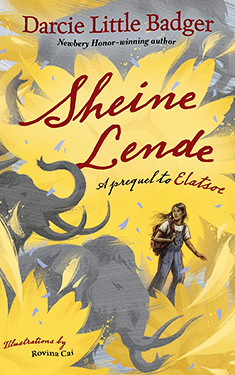
This YA novel is set in a universe established by the book Elatsoe, published a few years ago.  I did not read that book, but this one is a sort of prequel, centering on Elatsoe’s grandmother when she was seventeen-years-old in the late ‘60s or early 70’s.  It’s an alternate US, where magic and the faeries are known to humans and sometimes the two intersect in dangerous ways.   In this book, Sheine, known as Shane because most people can’t pronounce her name correctly, and her mother have a gift of finding lost people.  They are of Lipan Apache descent living in Texas.   The world building is really well done.  I didn’t feel lost by not having read the first book.  It deals with a lot of important issues about indigenous and poor people.  And yet it was very entertaining, feeling light with lots of humor despite some serious content.  This is another Lodestone nominee at the Hugo Awards.  With one book to go, I rank this a close second to The Maid and the Crocodile.

Shane’s mother, Lorenza, is called on a new search and rescue.  This time a teen girl and her young brother are missing after hiking along the train tracks.  Lorenza goes without Shane this time, despite Shane’s protestations.  Lorenza takes their ghost bloodhound with her and sets off on the search.  After a while, the ghost dog returns without Lorenza and Shane goes on a mission to find her mother.  She finds faerie rings and concludes that her mother and the two missing children walked into one and disappeared.  Shane calls on her often unreliable grandfather for help.  Together, with Shane’s younger brother, best friend, and the missing kids’ grandparents, they go looking for them.  Shane accidently walks into one, finds the older sister, and returns, but believes the younger brother and Lorenza may have been transported to the Underworld.  This becomes a quest to find out more about the power of the faerie rings and how a living person can return from the Underworld.

One of the best parts of this book for me was the unraveling of the history of the faerie rings.  It’s very well thought out and conveyed with ease.  I was also impressed by the revealing of the alternate Texas magic system.  It was done in such a way that it was a constant pleasant surprise as the story progressed.  Again, not having read the first book, I may have been at a disadvantage, but I didn’t feel like it.  When a book begins with a ghost bloodhound, you just know it’s going to be interesting.  Then when we find that Shane can call up ghost butterflies and fireflies, it’s all that much more fun.

Yet the story is very serious.  Over the course of the mystery, we find out about how Shane’s father, grandmothers, and one grandfather died due to a flash flood.  We learn of the hardship of growing up dirt poor and moving from shack to trailer trying to survive.  And we also learn of the history of the Lipan Apache people and how they were displaced and driven to poverty.  Searching for her mother brings all this to our and Shane’s attention, awakening strength in her that she didn’t know she had.  

Amidst this character development for Shane, she also becomes closer to her best friend and the girl she rescued.  It creates a friendship between them that only comes from surviving tragedy together.  It’s a powerful subplot, as Shane begins this story very much a loner.  The character arc of the unreliable grandfather is also interesting.  Shunned by her mother, she pushes her grandfather to explain more and more why he deserted the family so many times despite their need for him after all the deaths in the family.  This creates conflict and closeness that also helps Shane through the search for her mother.

I give this book four stars out of five.  While I was really engrossed in it, it felt kind of lightweight, especially after reading The Maid and the Crocodile.  However, it also felt like a much more YA oriented novel than any of the other nominees.  I thoroughly enjoyed it and loved Shane and her character arc.  I think I’ll have to read the first book because I think Little Badger is a writer who will produce some exciting things in the future.  


Tuesday, July 15, 2025

The Maid and the Crocodile

Jordan Ifueko
Completed 7/13/2025, Reviewed 7/14/2025
5 stars

This side story to the Raybearer duology blew me away.  I was rather shocked because it is very prosy, spending a lot of time in the main character’s head thinking and reflecting.  While it seems like that would be rather boring, it somehow was action packed and full of great dialogue.  I found it much more engaging than the duology, even though I didn’t remember the world building all that much.  It’s advertised as being standalone and it was.  I was completely drawn into this book’s world building and the plight of this orphan struggling between listening to the inner voice that says keep to your station and an external voice telling her she could move mountains.  This book is nominated for the 2025 Lodestone Award at the Hugos and stands far above the others I’ve read so far.  This may be the one to beat.

Small Sade (pronounce SHAH-DAY like the 90’s singer) leaves the orphanage at the age of seventeen.  She takes her broom to help advertise herself as a maid at the town market.  She has vitiligo and a lame foot, requiring a cane to walk.  But she is also a Curse Eater.  She can clean a house and a person of negative energy and free them to be who they really are.  Before she finds a job, she accidently binds herself to the Crocodile, a mysterious god who devours girls sacrificed to him.  Her special gift endears her to him, though she refuses his kindness for fear of being eaten.  Eventually, she’s picked up by a formerly rich woman who owns an inn and wants her daughter cleaned of a curse that makes her sullen and keeps her from finding a suitable rich husband.  Eventually, she finds out the truths behind the innkeeper’s daughter’s malaise as well as the identity of the Crocodile and the curse he himself is under.  This forces her to make decisions about herself and her assumptions of the world that she never wanted to reconcile.

Sade’s journey was totally engrossing.  After a rather slow start, I was consumed with Sade’s welfare.  The formerly rich innkeeper uses Sade for her own desire to return to the upper crust of society.  All the while, Sade finds out more and more about the Crocodile.  He really wants her to think outside her box.  Sade wants none of it as experience has shown her that she should remain lowly and anonymous.  This cognitive dissonance takes up most of her inner narrative as he pushes her past her comfort zone.  But in that, we discover the faulty source of her belief system, drawing out our empathy for her.  I could totally relate to the dissonance as I’ve had to fight with my own inner demons to realize the value I had to offer the world.  

The Crocodile is a mysterious character.  Sade (and I) wanted to believe that his intentions were good, but experience shows that people don’t care as much as he seems to.  He clearly wants something from her besides breaking the curse that is on him.  Being an exceedingly handsome young man not much older than her, her attraction to him gets in the way.  And of course, he hides truths from her so that when they are revealed, she feels betrayed and deceived.  After reading the whole book, I had to reflect on her back and forth reactions to his behavior, wondering if she was being too obstinate and fearful for a reasonable person or if this was a believable dissonance that took so much effort to overcome.   I eventually landed on the latter after considering her age and the disappointment and despair she had encountered her whole life up to this point.  

There are a fair amount of instances of abuse, both physical and emotional that she and others like her endure.  At one point, she helps deliver a baby for a young woman whose husband began beating her when she became pregnant.  As awful as this sounds, it is based on the fact that greatest cause of death of pregnant women in the US is from spousal abuse.  Ifueko backs that up in her afterword with a citation for a study done a few years ago.  The author explains that she tried to bring truthful experiences into Sade’s life.  This makes the book gripping and hard to read at the same time.  But getting to the end is such a joyful experience that it’s worth the journey.

I give this book five stars out of five.  While Raybearer and Redemptor were terrific novels, this felt like a bigger achievement.  One might say the wrap up was too tidy, but after everything Sade went through, I was glad for a relatively happy ending.  This book may be a harder read than the first two, but it is much more satisfying.  Like the first two books, I thought this one wasn’t exactly YA, except for the fact that Sade and the Crocodile are still teenagers.  The themes are very serious and the abuse may be a trigger for some readers. But the end of the book makes the journey worth it.  


Friday, July 11, 2025

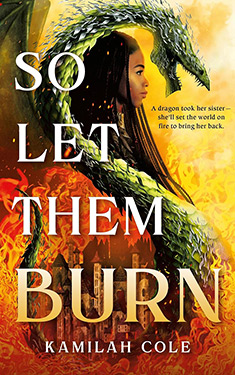
So Let Them Burn

Kamilah Cole
Completed 7/11/2025, Reviewed 7/11/2025
3 stars

I was really looking forward to this book which takes a Jamaican mythological perspective of dragons, colonialism, imperialism, family, and racism.  It’s a YA book nominated for the 2025 Lodestone Award at the Hugos featuring protagonists on the cusp of adulthood and a small pantheon of gods who interact with them.  The first half dragged miserably.  It was full of exposition to explain how everything got to its present state.  The second half got much better, but it didn’t quite pull me in as deeply as I would have hoped.  This being the first of a series, it ended with a cliffhanger and wow, was it a doozey. But I don’t know if I need to put closure on this story by reading the sequel.

Faron is the Childe Empyrean.  This means she was anointed by the gods to save her island from the invaders from the mainland.  She was chosen at age twelve and wielded the power to overthrow the Langley Empire.  They built mechanical dragons called drakes to fight Langley’s real dragons, and the people united to push out their oppressors.  The effort was helped by Reeve, son of the commander of the Langely Empire, who defected and helped throw his own people out.  Elara is Faron’s slightly older sister.  She wants to be a drake pilot but is passed over.  A few years have gone by and Langely is back for peace negotiations.  During that stay, Elara unknowingly bonds with one of Langely’s dragons and is taken back there to train.  Faron is distraught at losing Elara.  The gods tell her that the only way to break the bond with the enemy’s dragon will end up killing Elara.  So she and Reeve research alternatives and find that Faron must trust a renegade god who’s been bound in a limbo but doing so may destroy the world.

A lot to pack in there, for sure.  And this is just the beginning.  My biggest problem is that there’s so many dry recountings of the war for freedom, that it quickly bored me.  It wasn’t until Elara went to the Langely empire to train with the dragon that I became more engrossed.  It should be noted that it takes two riders to complete the bonding with a dragon.  Enter Signey, the first rider of the dragon.  She resents being bonded with Elara, being enemies.  But the Commander of the Langely forces and the island’s Queen both feel that it is in their respective nations’ best interests for this relationship to be allowed.  Both think they will have an advantage over the other, being able to manipulate their weaknesses and discover any secret plans.  Yes, the relationships get convoluted.

However, once all that is established, we understand the bonds of family and friendship and the moral ambiguity they each have in their roles for their government.  There’s the sisterly bond of Faron and Elara, the slow acceptance between Elara and Signey, and resentment of Reeve towards his father and country.  

Faron is actually a great main character.  She’s an expert liar and constant devil’s advocate despite being the savior of the island nation.  But her devotion to her sister could unravel reality.  She takes numerous unnecessary chances and usually succeeds.  Elara is also good, but in a different way.  Always honest and kind-hearted, she’s put into a terrible situation.  That’s complicated by her growing friendship and attraction to Signey as they come to trust each other as bonded dragon riders.

It was interesting reading this book so soon after rereading Dragonflight.  You can see the Pern influence on the dragon subgenre here, but it occasionally caused me some cognitive dissonance.  At times the book felt like fan fiction, at other times, it felt like a rip-off, then at other times, it felt like a very original application of the dragon trope.  I had a tough time getting this squared away in my head until at least halfway through with the evil god’s appearance and his relationship to the dragons.

I give this book three stars out of five.  The first half was tough, the second better.  It averaged out to being a decent book, but not the best post-Pern dragon book I’ve read.  I do give this book props for having strong, non-traditional, black, near-adult women characters and dealing with important themes.  If the sequel is nominated next year, I’ll definitely read it, but for now, I’ll wait and see how I feel about it. 


Saturday, July 5, 2025

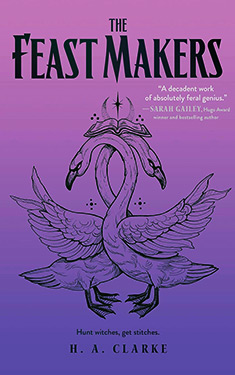
The Feast Makers

H A Clarke
Completed 7/5/2025, Reviewed 7/5/2025
3 stars

I really dislike reading latter parts of a series.  This book was nominated for a 2025 Lodestar Award, which is a non-Hugo YA award voted on by the Hugo voters (I know).  I only have 18 days left to read the remaining nominees in the categories I want to vote for, so I didn’t read the first two in this series.  This book is the conclusion of the Scapegracers trilogy.  It was a tough getting into it, since all the character development and world building had already been done.  I did catch on eventually, but found myself feeling rather indifferent to it.

It begins with Sideways, a non-binary lesbian teen and their small coven of three other teen girls, the Scapegracers.  They are going to a gathering of covens where a witch named Madeline will be dealt with for stealing souls and killing witches.  Madeline begs the Scapegracers for help and they do the right thing.  However, this is just a prelude to a larger plot by the witch finders to destroy as many witches as they can.  The Scapegracers just want to finish senior year of high school and Sideways just wants to figure out if they are falling in love.  But they all have pivotal roles in the unfolding events around them.

My biggest problem with the book was that it was written from Sideways’ first person POV.  While I usually enjoy this perspective, I found being in their head too crazy.  The whole book is written like the mind of a complex, high energy, obsessive teen.  The prose goes on and on and on.  I found it hard to focus and eventually tiring.  I’m sure this is like the mind of a teenager and I am probably too old to remember the tornados of my brain at that age.  Reading it, however, wore me out.  I felt like a good editor could have pared this down by about a hundred pages and still have had the impact it was intended to have.  If I had more time to read the whole series, I probably would have hated it by this volume, assuming the whole series was written this way.

On the positive side, it’s a very empowering story of a group of high school seniors making an impact on their community of covens as well as the community-at-large and their high school.  While the general feel of the four is that they are a bit on the juvenile delinquent side, they know to do the right thing when it’s necessary.  And this whole book is about choosing the right thing, even when it might mean death by witch finders.  

One thing I didn’t get is that Sideways didn’t seem to have much magical ability.  Not having read the first two books, I don’t know what their story is and why the other girls are more advanced in their magic.  Their best asset was that they were a headstrong butch lesbian, willing to take on anyone or anything to protect their coven, family, and friends.  Their worst asset was the constant storm of overthinking that went on in their head, as evidenced by the run-on prose.  

I thought the book worked overall.  It had its intended impact, and it was great to see a strong non-binary lesbian and cis girls.  The end was exciting, although there was an issue with a magicked marble that Sideways forgot about, but I had it in the forefront of my mind the entire book.  I thought it was rather sloppy execution.  I really like the book demons and would have liked them to be more in the forefront.  Perhaps they were in the earlier books.  I give this book three stars out of five.  It’s decent, just not great.  This is the first of the YA books nominated for the Lodestar, so we’ll see how it holds up compared to the other four.


Friday, July 4, 2025

2025 Best Poem Hugo Nominees

Completed 7/3/2025, Reviewed 7/4/2025

In this blog entry, I review and rank the six Hugo nominees for Best Poem.  This was a new experience for me as I’ve eschewed poetry for a long time, claiming to not get it.  The first poem was a little difficult, but on a second read, I got the point.  The rest came naturally after that.  All the poems were short, two to three pages.  One was novel length, and played with form.  I have a full blog entry for that one.  Here, I just give a quick impression of the poems, as they don’t really have plot, but are just an amuse-bouche of a thought.  Here is my list from favorite to least favorite:

“Your Visiting Dragon” by Devan Barlow – I liked this one the best.  Just a simple, delightful poem about what to do when a dragon comes to your place to settle in for the winter.  

Calypso by Oliver K. Langmead – An epic poem about a colony ship on the way to terraform a planet for human habitation.  It plays with form and has multiple POVs.  I liked it a lot.  Here’s the link for my full review of Calypso.

“A War of Words” by Marie Brennan – Not sure of the meaning of this one.  It may be about censorship and oppression.  That was my feeling, but I may be putting too much into it.  It just feels like what’s going on right now with ICE and detention centers, the expunging of inclusive language from government documents, and the loss of democracy to fascism.

“We Drink Lava” by Ai Jiang – Perhaps about authoritarianism and failing to respond to it, couched in images of old gods drinking lava and turning to glass as it cools down the throat.  It’s written in a way that feels very immediate.

“there are no taxis for the dead” by Angela Liu – This is about the dissipation of essence after death, I think.  Definitely weird, as it sounds like horses pulling an old-time hearse as the soul forgets its life and memories.

“Ever Noir” by Mari Ness – It’s either about a murder-for-hire or fairy tales.  I didn’t get this one.

Well, those are my rankings.  It’s odd how I really like some of the poems and don’t quite understand them.  It’s like the words just evoke a mood of calm or uneasiness or dread.  That’s how I responded to several of these.  The poems can be found in magazines like Uncanny, Strange Horizons, and Haven Spec, except for Calypso, which is published as a book.  


Thursday, July 3, 2025

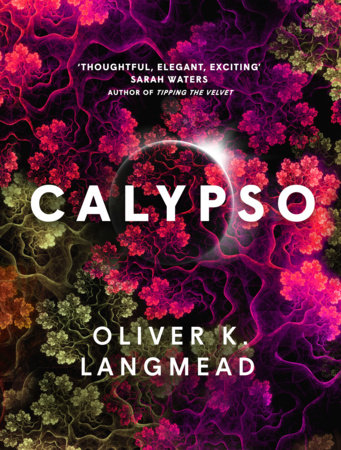
Calypso

Oliver K. Langmead
Completed 7/3/2025, Reviewed 7/3/2025
4 stars

This is a novel in poem form.  It uses different formatting for the different character POVs.  In the past, I’ve always said I didn’t get poetry very often.  Since then, I’ve read books that played with form and I’ve read most of Tolkien’s poetry, including his alliterative epics.  All that literary experience helped me greatly appreciate this book.  It’s standard sci fi tropes: generation ship, terraforming, space opera.  But it’s written so beautifully, if feels fresh.  This book was nominated for the 2025 Hugo for Best Poetry.  I think is also helped that I read all the short two-page poems that were also nominated first.  It prepared me for reading a novel in verse form.

The story begins with Rochelle awaking alone from cryo-sleep aboard the Calypso.  She finds herself alone with all the other engineers’ pods empty.  While exploring the ship, she finds Catherine, a genetically modified biologist, and eventually the crew and their apparent leader Sigmund.  They are orbiting the new home planet which will be terraformed for all the colonists asleep in uterine-like sacs.  Rochelle discovers that during the journey, there was a rebellion by the people guarding the sleeping engineers against “king” Charles and the support crew about the meaning of establishing “paradise.”  And Rochelle seems to hold the balance of power between them.

The majority of the book is told from Rochelle’s POV.  Her narrative is told in standard quatrain form.  She reminisces about the past she left behind, her husband and children, for this adventure to establish a colony on a distant world.  She often refers to her religious upbringing by her pastor father, although her faith is based more on their relationship than his sermons.  She is an engineer, the last remaining on the ship, as the rest left to establish an engineer-based society on one of the planet’s moons.  She doesn’t know what to make of everyone who remains but is sure something is not right with Sigmund.  Rochelle only feels close to Catherine, who seems to be some kind of human/plant/animal hybrid.  

Catherine is in charge of the terraforming of the new planet.  She is also kind of an earth mother, in more ways than one.  She is gentle and kind and takes care of the plant and animal life on the Calypso.  Her POV narrative is told in an undulating sinusoidal pattern.  The varying length of each line together with the story she is telling is simply mind-blowing.  I don’t know what it takes to create words in comprehensible narration that fits into the undulating format.  When Catherine descends to the planet and performs the terraforming, combined with the form, it’s like divine creation.  

Sigmund’s narrative is third person, reflecting on his past life as the brains behind the building and execution of the Calypso.  His text is right justified.  The narrative gives some insight into what got him on the path that leads to the ultimate showdown between engineers and rest of the crew of the Calypso.  He isn’t portrayed as a bad guy initially, but it becomes clear that he is not forthcoming and perhaps a bit megalomaniacal and definitely narcissistic.  

Overall, I was very impressed with this book, more so than I thought I’d be.  I give this book four stars out of five.  I highly recommend this book if you’re looking for something different and are not afraid of prosy writing.  It’s quite beautiful, although, like regular, highly prosy novels, it can be too lulling, which makes me zone out and lose track of when the plot kicks back in.  Still, I found it a wonderful read.


Tuesday, July 1, 2025

The Accidental Alchemist

Gigi Pandian
Completed 7/1/2025 Reviewed 7/1/2025
3 stars

Taking a little break from my Hugo nominee readings to get in my next book club book.  This is described as a cozy fantasy mystery.  I think it’s cozy because there’s a lot of tea drinking involved.  It’s not quite as cozy as the Legends and Lattes, but it was fun.  I did appreciate that I was able to follow the mystery with the clues, etc, and I actually didn’t know who the killer was until the end.  Perhaps I should have, but the author did a good job of obfuscating the truth.  

The story takes place in Portland, Oregon, which was fun for me, living in the metro area.  I’ve spent a lot of time near where the events took place on Hawthorne Ave.  Zoe Faust moves to the Hawthorne district after spending several years travelling across the US in a trailer.  Before that, she had fled Paris after giving up alchemy, except for herbal concoctions.  Now she’s bought a fixer upper and has had all her storage delivered to the house.  She finds that several of her boxes have been torn open and to her surprise, a living gargoyle pops out.  He explains to her that he needs her help with a very old alchemy book to prevent him from turning back into stone.  Unfortunately, she is very much out of practice and unaware of the symbols in the book.  Then, a local boy breaks into her house, assuming it was still unoccupied and haunted.  He sees the gargoyle and they swear him to secrecy.  The next day, after a walk to a tea shop, she finds a dead handyman on her lawn and her books stolen.  This leads to the mystery of who murdered the man, who stole the books, and a race against time to recover the strange alchemy book to save the gargoyle.

The plot is decent.  The characters are okay.  The book is told from Zoe’s first-person perspective, which was helpful.  She carries around a lot of guilt over the death of her brother and her lover in Paris.  She blames alchemy for their deaths and thus her limiting herself to herbal work.  I bought that she was carrying a lot of guilt, but I thought her processing of it during the course of the mystery felt a little forced.  And she’s not quite a Mary Sue, but close.

Dorian the gargoyle, on the other hand, was a fun character.  He was very French.  He spent a lot of his time cooking, trying to recreate classic French food for Zoe who is a vegan.  That was fun.  The author included some of the recipes at the end of the book.  Dorian was very polite while still being in a panic over turning back to stone.  His banter with Zoe and Braxton, the boy who broke in and saw Dorian talk and move, was light and funny.  Overall, my favorite character.

I was surprised that the other characters didn’t feel as wooden as I thought they would.  I generally liked most of the supporting characters.  They were all very “Portland,” from my experience in this city.  Only Max, the detective on the case was constructed very oddly.  He’s very secretive and clearly embarrassed by his attraction to Zoe.  Yet, the conversations between Max and Zoe were too stilted and very odd.

This was definitely a fluff book, being “cozy” and all.  There was no violence except for the murder and an attempted murder later in the book, but nothing graphic.  There are seven more novels and one novella in this series.  If I was more of a mystery person, I might seek these out when I wanted something light.  I would definitely recommend these to my mystery loving friends looking for a bit of fluff.  I give the book three stars out of five.  Not a masterpiece, but not bad, either.  


200,000 Hits!

Well, it only took two more years to get to 200K hits!  I get a lot of hits from Singapore, Malaysia, and lately, Brazil.  I don't know if these are bots or real people.  I know that I occasionally get comments so at least I know some are real people.  😀  


Currently, I'm reading as many of the Hugo nominees as I can so I can vote in good conscience for this year's Hugo Awards for WorldCon in Seattle.  The voting deadline is July 23rd, so I need to get through as many books, stories, and excerpts as I can by then.  It's my first time voting in the Hugos and I'm really excited about it!


After that, I'll go back to my usual pace.  I've got some self-published books as well as M/M romantasy on my TBR pile that I'm looking forward to.  I just picked up a self-published duology at Beaverton Pride yesterday.  The book is described as wacky as Hitchhiker's Guide with drag queen robots and lesbian space warriors etc etc.  It should be fun.  


Here's to another couple of years of great adventures in reading!