Friday, December 15, 2023

Gathering Mage

Michael Taggart
Completed 12/14/2023, Reviewed 12/15/2023
5 stars

I adored this book.  It’s 850 pages felt like nothing, making me read over thirty pages an hour (except on the nights when I passed out while reading because I read until super late the night before LOL).  It truly had me engrossed.  I loved the main characters, the intricate magic system, the world building, and the excitement of the setting.  Unlike the previous two books in the series, Misfit Mage and Melee Mage, this had a lot more substance even though I could still argue that this was fluff.  This one just came together for me in so many ways, and I realized I had missed being in this world that Taggart created.  I also found out in the afterward, that this and the fourth book were written as one huge epic, which he split into two books.  So that was all the motivation I needed to jump into the next one without taking a break with a different author.

This book is quite a different setup than the first two.  It continues the story, which began only a few months ago, of Jason Cole, a young gay man who has just discovered he’s a mage.  He lives with Sandy, the head mage of the magical House, her husband John the mountain troll whom she just married, and another mage named Annabeth who’s magic is linked to music.  Jason is in love with an incubus named Tyler, and they’ve just declared their relationship status as boyfriends, not just friends with benefits.  Jason has a cat named Bermuda who is recognized by other mages as a revered Celestial Guardian.  

In this book, Sandy and Jason go to week-long gathering of mages.  It’s kind of like a convention where the mages of the world come together to share the experiences in their respective Houses.  Both are young mages: Jason only a few months old, and Sandy only about 70 years old.  They’re there to learn as much as they can.  Jason grows in many ways, particularly in his understanding of his own magical nature and in how he accesses this magic.  But besides the usual fun and education of going to a convention, the two run into trouble.  There is a growing movement that wants to cast out the new mages, whom they call rats, from the Houses, claiming they are draining their resources, physical and magical.  This eventually leads to a showdown between the forces of good and the rat haters.  In between, there is a ton of fun and excitement that leads up to this final showdown.  

You’d think that a story about a convention would be kind of boring, but Taggart makes it unbelievably fun.  Beginning with the opening ceremonies, for which Sandy and Jason create an ad hoc show to represent their House that blows away all the participants, there are tons of new aspects of magic for Jason to discover and explore.  There are new friends to meet and new enemies to avoid.  In particular, there are the centaur llamas, beings from another plane who act as servants because they lost their magic generations ago.  Jason befriends one of them and opens a whole new relationship between the centaurs and the mages that all had thought disappeared ages ago.  There are also the tree creatures, mages who are also from another plane.  After a misunderstanding between Bermuda and a giant dragonfly, the trees and Jason and Sandy also become fast allies.

I just loved Jason in this book.  Perhaps one can argue he’s a male Mary Sue (sometimes called a Gary Sue).  Jason is almost certainly a fictional Taggart, and he’s a little too perfect at times.  And after all, the series is called “The Fledgling God.”  Jason is just so adorable and naïve and vulnerable that I can’t help but love the character.  I cheered for him throughout the book, felt like I was him, and at the end, I wished it wasn’t over (thank heavens for the fourth installment).

I really got into the magic system in this book.  It is quite complex.  Taggart almost makes a science of the way that Jason visualizes, stores, and access his magic.  There were times where Jason works and grows his internal magic for pages and pages (and pages).  I think it could have been boring, but I found it totally intriguing.  When he actually uses his magic to heal or in combat, it all makes complete sense.  

The only complaint I had was there’s a deus ex machina towards the end.  However, after I acknowledged it, I completely bought into it.  After all, Jason is a fledgling deus himself.  And there’s foreshadowing of it when Jason meets the All-Rune in a powerful sequence earlier in the book.  

I am so glad I took the chance on this self-published series.  I got it because the guy on the cover of the first book was hot.  And what began as fun fluff turned into something a little more meaty but no less fun.  I give this book five stars out of five for being an intense page turner, thoroughly entertaining, and highly addictive.

Sunday, December 3, 2023

The Spare Man

Mary Robinette Kowal
Completed 12/3/2023, Reviewed 12/3/2023
3 stars

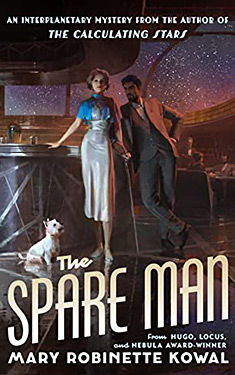
This was an okay book by a writer who has written some terrific stuff, including the Hugo and Nebula Award winning The Calculating Stars.  It’s a murder mystery aboard a spaceship traveling between the Moon and Mars during the ultra-rich main character’s honeymoon.  Reading this book felt like a throwaway, kind of fun, kind of suspenseful, a little science fiction-ish; certainly not up to par with the Lady Astronaut series.  The best part about the book was the characterization.  I didn’t get lost in the number of characters and there was a cute service dog that distracted me when the plot got boring.  I’m guessing this got a 2023 Hugo nomination on the strength of her previous books rather than on the quality of this one.  Of the four of the six nominees I read so far, this one was the weakest.

The main character is Tesla Crane, a brilliant engineer and one of the richest people in the world.  She’s on her honeymoon with the new husband.  Tesla was in a horrible space accident that left her permanently in pain from a severe spinal injury.  Fortunately, she has a device implanted in her that can prevent her from feeling the pain.  She sets it to varying levels depending on how much she needs her sense of touch.  She has an extremely cute service dog that everyone falls in love with.  On this trip, she’s using a digital masking device so she’s not recognized and swamped by fans.  Everything goes smoothly until someone is murdered and she and her husband are first on the scene.  The ship’s inept security suspect her retired private detective husband and take him into custody.  Tesla’s mission is to prove her husband’s innocence and find the killer before they strike again.

The characterization was quite good.  I had clear pictures and impressions of most of the characters.  The story is told from Tesla’s perspective in third person.  Through her we see the inept security team, the other ultra-rich passengers, her super-intense lawyer, and several of the service employees.  Almost everyone of these characters in her eyes is a suspect.  And she’s out to find out who the murderer is.  She’s really a good character:  determined, independent, successful despite being in paralyzing pain.  

I also really liked how the author portrayed Tesla’s PTSD.  It was very enlightening.  It included a terrible flashback and Tesla’s process for staying grounded.  The PTSD was the reason for Gimlet, her adorable service dog.  Gimlet could sense when the panic attacks were coming on and helped ground her as well.  Of the things that were right about this book, this was probably the most profound.

What I didn’t like about the book was that it felt like a standard murder mystery.  I don’t know how mystery fans would like this book, but I was often bored.  I didn’t feel like the story moved well until the last hundred pages or so.  I liked bits and pieces, like the introductions and interactions with some of the suspects.  I liked that the some of the suspects were guilty of other things, making them look suspicious.  But the time between these was not fast-paced.  

I give this book three stars out of five.  It was okay, but nothing special.  The prose was nice and world building decent.  The spacecraft’s concept was interesting, with different levels having different gravities:  Earth’s, Mars’, and the Moon’s.  Also, the descriptions of the Coriolis effect on movement in the ship were interesting.  But it just didn’t work as a whole for me. I found myself not really motivated to finish the book until the last quarter, and that because I just wanted to know who the murderer was.  


Sunday, November 26, 2023

When the Angels Left the Old Country

Sacha Lamb
Completed 11/25/2023, Reviewed 11/26/2023
5 stars

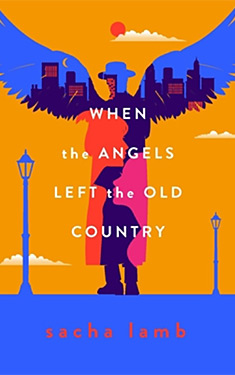
This was an incredibly delightful novel about a Jewish angel and demon at the turn of the 20th century who travel from the old country to America in search of a missing emigrant from their shtetl.  This book won the 2023 Mythopoeic Award as well as several young adult fiction awards, the latter I was surprised by because this book didn’t read YA.  It simply had a queer sixteen-year-old girl as one of the major characters.  This book is immersed in Jewish tradition and mythology and has the occasional Yiddish words thrown in.  Fortunately, at the end of the book, there’s a Glossary of Terms to help with the words.  This was one of those books where I fell in love with the main characters and was sad to see it end.  But I read it voraciously, in just over two days.  

Little Ash is a Jewish demon who studies the Talmud with a Jewish angel.  The reason for noting them as Jewish is because there are demons and angels from all the other faiths, a few of whom pop up later in the novel.  Little Ash and the angel live in a tiny shtetl (village) that doesn’t even have a name.  One day, they hear about a young girl who left for America but her family hasn’t head from her since she left Europe.  Since the family can’t afford to go to America, Little Ash decides to go and convinces the Angel to accompany him.  In a nearby larger town, a young girl named Rose emigrates to America, even though her best friend who was supposed to go as well, stays in the town because a boy proposes to her.  Little Ash, the angel, and Rose cross paths on the ship and end up hanging out together.  In addition, Little Ash names the angel Uriel for forged papers purposes, causing a transformation in the angel, for good or for worse.  Along the way, they find that the missing girl is just one of many emigrants from the Jewish area of Russia who have been tricked into indebtedness and forced to work for a pittance in factories in New York.  

I loved Little Ash and Uriel.  They are study partners, but having been studying so long, they are basically in a relationship, albeit, a non-sexual one.  But they certainly act like they are an old married couple.  Little Ash, despite being a demon, is not your Christian idea of a demon.  He’s more of mischief maker than anything else.  Uriel, before accepting the name for itself, is kind of an airhead, not remembering much and naming itself for whatever circumstance it’s in.  When Uriel accepts the name, at the prodding of the ghost of rabbi, it begins to take on more human characteristics, including remembering things, and having a more difficult time with circumstantial good vs. evil.  Both Little Ash and Uriel go through many changes on their journey, including that of their relationship as Uriel becomes more aware of itself and the world.  One of my favorite scenes is when the two go to a dance hall with Rose and Uriel develops an intense desire to dance with Little Ash.

Rose is also a great character.  She is in love with her best friend, even though she doesn’t understand the feeling, let alone have a name for it.  When her friend decides to stay in their hometown to get married, Rose is crushed.  Being a strong young woman, she picks herself up and emigrates to America on her own.  When she teams up with Little Ash and Uriel, the trip begins to feel more like an adventure, helping her get over her misplaced feelings.  

The world building is terrific.  It was a little reminiscent of the setting for The Golem and the Jinni in that much of it takes place in immigrant-heavy areas of New York City.  The scenes at Ellis Island are devastating, dispelling any fanciful myths about the process of immigration during the European exodus.  The scenes on the ship are intense as well, with the overcrowding and the contagious coughs and fevers.

Reflecting on the book a day after finishing it, I realize that it’s not a light book.  There are many dark scenes as the experience of immigrants was very difficult.  At the same time, there’s a lightness to the book in its supernatural foundation.  The banter between Little Ash and Uriel, and subsequently, with Rose, relieves some of the heaviness.  The book is not simply depressing, nor is it hysterical.  But it is funny and sad and dark and heartwarming.  It evoked many emotions in me which I did not expect.  It was simply a joy to read.  I give this book five stars out of five.


Thursday, November 23, 2023

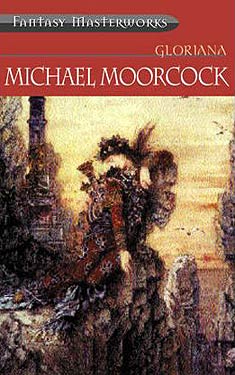
Gloriana

Michael Moorcock
Completed 11/23/2023, Reviewed 11/23/2023
3 stars

This was an extremely well-written novel with terrible content.  It’s a parody of The Fairie Queen as well as an homage to another author.  It’s an alternative universe Great Britain and Elizabeth I, here named Albion and Gloriana, respectively.  It’s full of court intrigue and sex.  Somehow, the sex is done matter of fact and not pornographically.  The original ending was a terrible message and Moorcock was reprimanded about it, so he rewrote the ending.  It’s still not great, but at least a little more palatable.  This book won the 1979 World Fantasy and Campbell Awards, thus concluding my personal challenge of reading all the Mythopoeic and World Fantasy Award winners through last year.  I have yet to read this year’s winners, but they were outside the scope of my challenge.  

Gloriana has ruled over a Golden Age of Albion for thirteen years since the death of her despot of her father, the King.  Her only problem is that she can’t achieve orgasm.  Thus, she is unmarried, determined not to marry until she can be sexually fulfilled.  In the meantime, her Chancellor, Montfallcon, uses spies, kidnappings, and assassinations to preserve Gloriana’s throne.  This leads to some complex and underhanded court politics, namely, the employ of Quire, an extremely successful rogue, by Montfallcon.  After an argument, Quire leaves Montfallcon to work for another kingdom to help bring down Albion and Gloriana.  Suddenly, there are unsolved murders in the Court, destroying the peace within and without, leaving Albion on the brink of war with the Tatars and revolution from within its own borders.

The best thing about this book is the writing.  It is an homage to older literary works, with long paragraphs of prose and soliloquies.  The characters are very verbose, particularly Montfallcon and Quire.  I have to admit that while I can say it was beautifully written, sometimes I got a little bored with the length of some of the passages.  However, I mostly found it engrossing to read complex word choices and sentence structures.  I don’t know if I can say if the world building was imaginative since I haven’t read The Fairie Queen or any of Mervyn Peake’s works (to whom Moorcock dedicated the book).  But in and of itself, it is well crafted.

I also have to say that the characterization was phenomenal.  I had a good sense of who many of the characters were and what drove them.  There were some lesser nobles who blended into one another, but the main characters were extremely well drawn.  Montfallcon’s fall from grace is terrific as is Quire’s dastardly betrayal.  Gloriana herself was rather simple, but Una, her personal secretary, was a terrific, strong female character.  

The whole orgasm plot was pretty weird.  There wasn’t much sex, just a lot of allusions to it, very matter of fact.  As I said above, there was nothing pornographic about it.  However, Moorcock leads you down that path and your mind fills in the details.  

WARNING:  SPOILERS FOLLOW!!

Along this plotline, the ending was pretty weird.  Gloriana finally achieves orgasm by overpowering her would be rapist by asserting herself as authentic self, not as Albion incarnate, as well as with the help of a knife to his crotch.  This is the revised ending.  Originally, she achieved orgasm during the rape, as in being completely out of control.  Fortunately, this ending was quashed by heavy criticism, particularly from Andrea Dworkin, the anti-pornography feminist and friend of Moorcock’s.  If this was written today, maybe Dworkin would have been a sensitivity editor and would have caught this before it was published.  But in 1978, I can see how the original ending would have gotten through the male-dominated publishing industry.  

Besides this major problem with ending, I also didn’t like how everything came together so neatly.  After writing such a complex novel, one would think Moorcock would have had a much more complex ending as well.  

I give this book three stars out of five.  Great writing, lousy sexual plotline, much too-tidy ending.  I’ve only read two other books by Moorcock, Behold the Man, a terrific parody of religion, and The Final Programme, a decent parody of spy novels.  In the next year, I plan to read the Elric Saga, one of his most famous works.  I hope that is equally well written with hopefully a less problematic plotline.


Monday, November 20, 2023

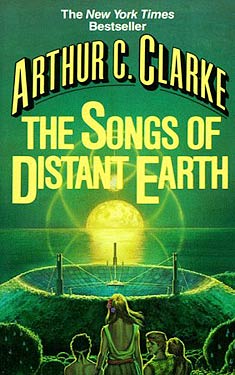
The Songs of Distant Earth

Arthur C. Clarke
Completed 11/19/2023, Reviewed 11/20/2023
3 stars

As loved and prolific as Clarke was, I never found his books to be that amazing.  I often found them a bit tedious with so much time spent on the science and so little effort spent on the characters.  The Fountains of Paradise, one of his Hugo winners, was a yawner.  His other Hugo winner, Rendezvous with Rama, was like Space Odyssey, full of wonder, but lacking character development.  This book is not really full of wonder, but full of interesting science.  It questions why there are so few neutrinos from the Sun striking the Earth and devises a 20% of the speed of light form of propulsion.  There are a lot more characters than usual, and a lot more time with them.  There’s not much development, but at least we get some human interaction.  

Thalassa is a near-utopian colony inhabited by one of the early missions to escape the destruction of Earth from the Sun’s pending nova.  When they landed, they had communication with Earth for a while until a volcanic event destroyed their comm link.  About 700 years later, the spaceship Magellan approaches hoping to find the colony still alive.  The ship carries almost a million people in suspended animation and is one of the last colony ships to leave Earth.  A small delegation comes down to meet with the Lassans and offer to trade technology and art from the last centuries in exchange for millions of tons of ice from the ocean to use as a shield for their ship.  Of course, intermingling occurs between the Lassans and the just over a hundred awakened crew.  A few fall in love with the locals.  A few want to stay rather than continue on to the ship’s original destination, Sagan 2.  Several want to end the mission at Thalassa all together.  This all causes some strife and human drama.

What I enjoyed most about the novel was that human drama.  The characters are rather two-dimensional, but I actually liked them and empathized with them a little.  They had some normal interaction and dialogue, though the emotion was sparse.  One could say it was a little soapy and melodramatic, but I thought it wasn’t too bad.  One thing I didn’t care for with the characters were some of their names.  Some were borrowed from science fiction writers.  Some were a little too close to other fiction, like Mutiny on the Bounty.  Clarke even gives one of the characters who wants to abandon the mission to Sagan 2 the name Fletcher and has him reflect on whether his ancestors came from Pitcairn Island.  The familiarity of the names was just a little too, well, cute.

I also enjoyed the discovery of a possibly sentient sea creature during the Magellan’s stay.  It was a nice little scientific subplot that kept the book interesting.  I found that part more interesting than the vacuum drive Clarke describes.  

Like his other books, I give this three stars out of five.  It’s simply too devoid of feeling.  Even when one of the characters dies, there is little emotional response.  One of the main characters from Thalassan asks her lover from the ship to explain the need for grief.  Just too academic and stoic.  I did like the brief allusion to a bisexual encounter, but again, not much in the way of emotional description.  I’d say I liked this book about as much as Rama.  It was entertaining, but ultimately, I felt hungry for something more substantial.


Wednesday, November 15, 2023

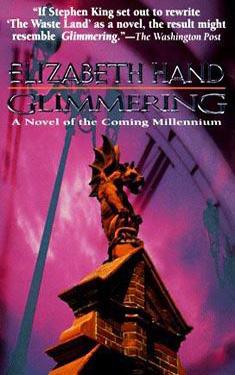
Glimmering

Elizabeth Hand
Completed 11/13/2023, Reviewed 11/15/2023
4 stars

Finishing this book completes my challenge of reading a dozen books by the prolific Elizabeths of Science Fiction and Fantasy.  This is the third book by Hand I read for the challenge.  While her other books were fantasy and horror, this was science fiction.  It concerns an apocalyptic event which sets the atmosphere on fire, creating a glimmering of colors.  The society begins to decay and rival groups vie for power.  It is a rather depressing book, but Hand takes it interesting places with a mix of gay and straight characters trying to survive in a nightmarish world.  This book was nominated for a 1998 Arthur C Clarke award.

The book takes place at the turn of the 21st century as the glimmering begins.  Jack is an HIV positive gay man living at his family’s large ancestral home with his grandmother and housekeeper.  He owns a literary magazine which once rivaled the New Yorker, but as resources become scarce, he barely gets any issues published and distributed.  The magazine comes under the gaze of major world corporation from Asia, offering Jack several million dollars as long as he stays as the main power behind its publishing.  But he doesn’t know if he should take the offer as the world slowly decays and his supply of life saving medication dwindles like other resources.  But then an old friend and lover offers him a miracle drug from Asia that actually seems to work.

At the same time, Trip is a young Christian rocker on the verge of massive stardom.  However, his fame is threatened by temptation that comes from a sixteen-year-old Polish refugee and the popular new drug IZE, more addictive than heroine and on the verge of getting FDA approval for general distribution.  Trip and Jack’s paths cross as the world approaches New Years Eve and the doomsday cults are poised to rip the power out of the megacorporation that may have an answer to ending the glimmering.

This book is not long, but it packs a lot of punch into its 350 pages, as you can tell from the complex plot.  But Hand handles it deftly.  I was never confused by all the events taking place and was impressed by how she brought the characters across each other’s paths.  The science of the glimmering is a little vague, but its effects on the main characters and the general population are terrifyingly specific.  As usual, Hand’s prose is wonderful without being overbearing, creating a gritty wasteland of New York City and its suburbs and even the mess left of rural Maine.  

The characterization is terrific.  I felt like I was living inside both Jack and Trip, as different as they were from each other.  I didn’t care for either of them at first, but clearly empathized with them.  Jack’s ex, Leonard, is deliciously creepy.  He’s probably the most interesting character, being a Warhol-like photographer who specializes in species going extinct.  He also has his hand in various other ventures including AI and the music business, which introduces him to Trip.  He pops up throughout the book, and while not necessarily a bad guy, he has quite a few antagonistic traits.  

The book is clearly dated, with it forecasting the events of the change of the millennium, and its punk and grunge influence, but it still rings true in many ways for society today.  Near future apocalyptic books often do, the good ones, anyway.  And this is one of the good ones.  It’s a tough read, with minimal humor and lots of despair, but I found it engrossing and chilling.  I give this book four stars out of five.  


Sunday, November 5, 2023

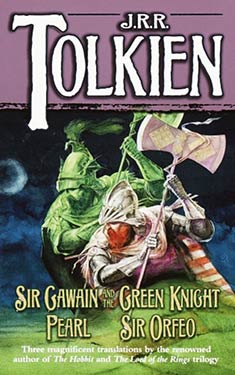
Sir Gawain and the Green Knight, Pearl, and Sir Orfeo

JRR Tolkien
Completed 11/5/2023, Reviewed 11/5/2023
4 stars

I’ve never had much of a fondness for poetry.  I was usually too caught up in the mechanics to understand or appreciate the story, emotion, or sentiment.  That changed when I began to read Tolkien’s poetry.  For some reason, I got it.  This book is a collection of 14th – 15th century poetry that Tolkien studied and translated into modern English, keeping the form of the originals as close as possible.  The result in the case of Sir Gawain and the Green Knight is a phenomenal alliterative tale of morality and courtesy in Arthur’s Court.  Pearl is a dream-like fantasy of ABAB poetry, and Sir Orfeo is a variation of Orpheus and Eurydice again in ABAB style.  I enjoyed them in varying degrees.  

For the most part I enjoyed Sir Gawain’s tale.  I find alliterative poetry a little tough to get into, but generally can get used to it after about ten or so pages of it.  Alliterative means that there is a recurring sound in the line.  For example, “Attend the tale of Sweeny Todd” has three T’s.  When each line is like that, I find myself looking for the recurring sound rather than paying attention to the story.  But I did get into the story, which is basically a morality play.  

Sir Gawain, the nephew of Kind Arthur, takes a challenge to fight the mysterious Green Knight in a one-stoke only game.  Gawain gets the first stroke, with the Green Knight’s return stroke coming a year later.  Thinking he’ll kill the Green Knight, he cuts off his head, but the Green Knight gets up, takes his head and rides off.  Now Gawain is bound to find the Knight to let him have the return stroke. During the interim year, the young knight ends up in a castle where the lord engages him in another game of gift giving and chastity.  

I found it strange the Gawain naively takes up these games without thinking of the catches, but was able to suspend disbelief to enjoy the story.  The only real hindrance to my enjoyment was the somewhat archaic structure of the poetry, with subject, verb, object being bounced all over a line.  Like Shakespeare, you get it after a while, but it occasionally made it difficult to follow.  

Sir Orfeo was a cakewalk by comparison.  He is a king with a queen who is stolen by fairies.  He goes into a self-imposed exile to mourn her disappearance only to find a secret way into the faerie realm to bring her back.  It was very easy to follow the story, which is short and to the point.  Gawain on the other hand is nearly one hundred pages long.  

I didn’t enjoy Pearl at all.  It a story about a man mourning a deceased child.  He dreams she returns to him in a dream, appearing from heaven.  The narrator then sees images derived from John’s Apocalypse and David’s Psalms.  Mixing religious symbols in a dream state with poetic form made for tough reading.  If Christopher Tolkien didn’t have a forward to this piece, I would have been totally lost.  I felt this story was a blemish to an otherwise very good example of the erudite poetry that Tolkien excelled at.  

I give the book four stars out of five on the strength of Sir Gawain and Sir Orfeo.  The translations from middle English to contemporary poetry keeping the flavor and form of the original and still be able to tell a comprehensible story amazes me.  From other reviews, I heard that listening to the audio book is not as enjoyable, which makes sense.  I would think it would be much easier to read and listen to the poems at the same time.  Anyway, I’m glad I finally read this book, which had been sitting on my Kindle for a few years.  Hopefully next year, I’ll read another one of his translation books.  There are still one or two out there which I haven’t read yet.