Tuesday, June 21, 2022

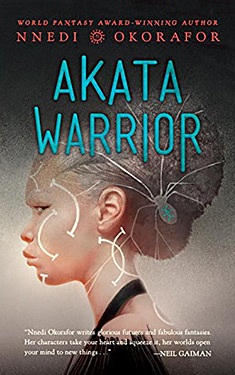
Akata Warrior

Nnedi Okorafor
Completed 6/21/2022, Reviewed 6/21/2022
4 stars

This is the second entry in the Nsibidi Scripts trilogy.  It continues the story of Sunny Nwazue and her training as a Leopard, that is, a person with magical powers.  Sometimes, the sophomore effort of a series is not as good as the first, but this one matched the awesomeness of Akata Witch.  I enjoyed it just as much as the first.  It’s still set in the alternate Nigeria of the present where some people are magical and a whole other dimension exists side by side with the non-magical.  Sunny grows, being thirteen in this book, learns more magic, and has to fight an even more dangerous enemy.  The writing and imagination are simply terrific.  Yes, it’s YA so it’s easy reading, but it’s also engrossing, fast paced, and believable.  It was nominated for a Nommo Award and won the Locus YA Award.
The story continues as Sunny trains under her mentor, Sugar Cream, an older, very experienced, and very powerful Leopard.  Her relationship with her family is still strained as they are Lambs, that is, non-magical, and the rules say that she cannot let them know anything about her magic life.  However, they are beginning to realize that she is more than their disappointing albino daughter and give her more leeway, allowing her to spend more time with her Leopard friends and in training.  When her eldest brother goes away to college he gets caught up in with a dangerous confraternity.  Sunny and her friend Chichi must help to get him out.  Around the same time, she discovers that the masquerade, that is, masked demon, that was behind the evil Leopard of the last book is crossing over into the Lamb world and may cause the apocalypse.  It is revealed to Sunny that she is the one who must defeat the masquerade and save the world.  

The characterization in the book is still wonderful.  I love Sunny and her little coven, which includes Orlu, Chichi, and Sasha.  Chichi and Sasha still live dangerously and Orlu is still the one with the level head.  This time around, they are accompanied by a giant grasscutter, a large rodent that flies.  The grasscutter, known as Grashcoatah, is helpful and also precocious.  He has the power of invisibility, but loves to appear for a fraction of a second to Lambs to make them feel terror for what they believe is no reason.  This of course eventually leads to trouble.  However, he lightens the mood, throwing a little humor into the serious situation.

We also get a more descriptions of Sunny’s family, particularly her older brother Chukwu, whose name is also the name of the supreme deity.  Chukwu is in love with Chichi, but Sasha is also in love with her.  It becomes a love triangle as Chichi plays both boys against each other.  Sunny writes her brother off, considering he wrote her off most of her life, until he gets into trouble at university.  Chukwu actually grows and becomes a likeable person even through the tension with Chichi and Sasha.  I came to really like Chukwu and empathize with him as he became an unwilling aide to the coven.

I give this book four stars out of five.  It’s fast paced, exciting, and believable.  I enjoyed every page of this longest book in the trilogy.  The prose is terrific and the world building continues to expand in wondrous ways.  I already borrowed the third book from the library which I’m going to read after a break of one book, the July selection for Book Club.  


Monday, June 20, 2022

Phototaxis

Olivia Tapiero, author/Kit Schluter, translator
Completed 6/18/2022, Reviewed 6/18/2022
2 stars

First of all, the definition of the title is the bodily movement of a motile organism in response to light, either toward or away from the light’s source.  It’s not taking pictures of taxi cabs.   This was a very strange, surreal, existential novella by a Canadian written in French.  It was translated last year and nominated for a 2022 Lambda Literary Award.  The category has changed from LGBTQ  Science Fiction/Fantasy/Horror to LGBTQ Speculative Fiction.  And this book is definitely speculative fiction.  It’s not sci fi, fantasy, or horror.  In fact, I barely figured out what this book was about.

The best way to describe the “plot” is to just give you the online synopsis that most sites use.  “In a city mysteriously overflowing with meat, a museum is bombed, a classical piano player hooked on snuff films throws himself off a building, a charismatic but misled political organizer has disappeared, and a young immigrant navigates a crumbling continent.”  Two of the characters, Theo and Zev were in love at one point.  Theo is the classical pianist.  The other two characters, Zev and Narr, are the political organizer and the immigrant.  But I really can’t tell you what else happened besides a sandstorm.  The plot was barely linear.  The story is mostly surreal images.

The prose is the only thing that’s outstanding in this book.  Tapiero uses beautiful language.  But as for the rest of it, the world-building was as incomprehensible as the plot.  There’s no character development.  The characters are just there, when you can decipher who’s narrating.  Yeah, I didn’t get this book.

I can’t say much else about it because I can’t describe it.  I give this book two stars out of five because the words were pretty.  If you like weird, surreal writing and imagery, this is the book for you.  It wasn’t the book for me.  I think the Lambda Literary Awards selection committee for this category were just a little too erudite this year, choosing a book that that’s all style with no substance.  I’m glad it didn’t win.


Saturday, June 18, 2022

Trouble the Saints

Alaya Dawn Johnson
Completed 6/18/2022, Reviewed 6/18/2022
2 stars

I had read four of the five books nominated for the World Fantasy Award for 2021 and loved them all.  When the award was given, it went to the book I hadn’t read.  So, I thought the winner must be really good.  I guess my hopes were too high because when I finally got around to reading it, I didn’t get the hype.  Through most of the book, I was bored out of my mind, which really disappointed me considering the setting, characters, and themes.  It’s a noir novel that takes place shortly before the American entry into World War II.  The characters are mostly African American and they have gifts called hands associated with their hands that give them something of an edge in an otherwise hostile, white-dominated society.  But I struggled with finding a plot and having empathy for the main characters.  It finally came together in the last fifty pages or so, but that didn’t make up for what I felt was a nearly incomprehensible and tedious first three hundred pages.


Phyllis, aka Pea, is an assassin for a Russian mobster.  Her hands have a mastery with knives and mete out justice to those she is assigned to kill.  The book begins with her refusing an assignment to kill a woman despite the woman trying to kill Pea. Instead, she focuses on trying to kill Victor, the Russian mobster for whom she works.  Pea falls back in love with Dev, a British Indian undercover cop who has infiltrated Victor’s organization.  Before Victor dies, he curses Dev and Pea.  The second part of the book is from Dev’s point of view and focuses on his struggle with his job versus the deep friendships he made in the mob and his love for Pea.  The third part focuses on Tamara, the snake dancer from Victor’s club.  Her hands are that she’s an oracle, telling fortunes from a special deck of playing cards.  What she sees throws her into a moral dilemma between saving Pea and protecting herself. 

Out of the three main characters, I came closest to having empathy for Tamara.  That’s probably because there was more of a plot to the third part, and her struggle is relatable.  It’s summed up perfectly in a riddle she tells.  Two people die, one a good person destined for heaven and one a bad person destined for hell.  The good person is given a choice.  If he lets the bad person go to hell, he’ll go to heaven.  But he can save the bad person from hell by choosing purgatory and thus they will both go to purgatory.  So does he go to heaven and have to live eternity knowing he condemned someone to hell or suffer in purgatory knowing he saved the person from eternity in hell?  It’s a powerful question and Tamara does not find the answer easy.  But it does exemplify the love and relationship the three characters have for one another.  

Through most of the book, I felt that there wasn’t much plot.  It jumped back and forth in time, describing the trio’s current situation as well as their relationships while Victor was still alive.  It told vignettes that help with understanding the characters’ motivations.  I can deal with character studies, but I still need something interesting to happen.  And I didn’t find anything really interesting in the events of the book until the end.

One positive thing I can say about this book is that it’s beautifully written.  I really liked the prose with its descriptions and word choices.  I guess I can say it’s a pretty book about not so pretty characters and situations.  Another is the topics brought out by the plot, the lack of choices and freedoms of black people in the forties, the need for something to overcome their difficult existence, and the dilemmas they must bear in their daily lives.  

I give this book two stars out of five.  I just couldn’t get past the boring nature of it.  I don’t need continuous action in a book, but I need some kind of movement of plot and empathy for the characters. If I were picking the WFAs, I would have chosen Piranesi by Susanna Clarke or The Only Good Indians by Stephen Graham Jones.  Looking at the ratings on several sites, this book gets as many four and five star reviews as it does two and three.  It’s definitely mixed.  So if the book sounds interesting to you, you may like this.  I didn’t. 


Tuesday, June 7, 2022

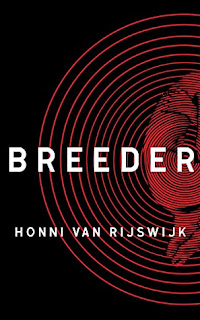
Breeder

Honni van Rijswijk
Completed 6/6/2022, Reviewed 6/6/2022
4 stars

This Lambda Literary Award nominee for 2022 is a dark, trigger-filled read.  It has strong echoes of The Handmaid’s Tale, but believe it or not, darker.  It’s a dystopian future after the Fourth Depression.  Climate change, world war, infertility, everything bad you can think of has happened.  There’s one city that has reinvented itself, controlled by a massive corporation that has created its own caste system based society and isolated itself from the rest of the surviving world.  Girls are taken at 12 or 13 and placed in incubators where they bear children derived from the embryos of the super fertile.  They are called breeders.  After a large number of live births, they become shadows, women who have earned enough credit by their birthings to marry and possibly bear their own children.  It’s so dark, I normally would have had a tough time getting through it.  But it is very well written and very fast paced and I ended up devouring it.

That’s the premise.  The plot features Will, a Westie, living in the outermost circle of the city, Zone F.  His education is Corporation indoctrination and working a menial job.  He lives with his grandmother.  They barely scrape by, living mostly in debt to the Corporation.  However, Will makes extra money by breeder running, that is, ferrying young girls from poor families to a shady organization that profits from making them breeders for the Corporation.  He also gets a drug called Crystal 8 on which he is highly dependent.  By chance, he meets a girl named Alex who reveals she is part of a revolutionary organization, called the Response, which is trying to topple the Corporation.  It becomes clear to him that she is a breeder in hiding.  They bond, although he does not tell her he’s a breeder runner.  One day, they get high and sneak into Zone B, one of the innermost circles, not meant for the lower class that they are.  They get caught and Will has to face one of the greatest fears of his life.  

The best part of this book is the plot.  It is intricately weaved with lots of surprises along the way.  The world setting is also well done.  Notice I didn’t say world building.  That’s because the world building is a little weak.  I had lots of questions about the world and the Corporation, and just took a lot of it as it came, filling in a lot of parts myself.  But the setup of this little world, like the zones, the incubators, the rators (as in incinerators), were very interesting and mostly made sense.  

I liked Will.  I had a lot of empathy for him, especially as his past is revealed.  It’s done slowly, with the big reveals not happening until about halfway through the book.  I was surprised by his revelations, missing the hints in the first half of the book.  But it is done well, my empathy for him grew as the book went on.  Alex is also a good character, although she is frustrating in her careless flaunting of her activities with the Response.  Ma, Will’s grandmother, is also a decent character, doing her best to keep Will’s profile low in this awful dystopia, where the slightest infraction can get you thrown in the Rator.

I’ve written over five hundred words already but have not mentioned any queer content, as one would expect from a Lambda Literary Award nominee.  It turns out it’s there, but it’s one of the twists and turns the book takes when everything goes wrong for Will.  When it appears, it’s pretty powerful stuff.  But it’s part of the dark context and can be a trigger for some readers.  

I give this book four out of five stars.  The lack of world building is made up for by the fast pace of the book.  I found myself reading this voraciously over a weekend.  I was also a little disappointed by the ending.  After finishing the book, I discovered that the author is making this into a series.  In that light, I can forgive the ending a little bit.  I do recommend this book, but there really isn’t any levity in it to soften the darkness.  


Saturday, June 4, 2022

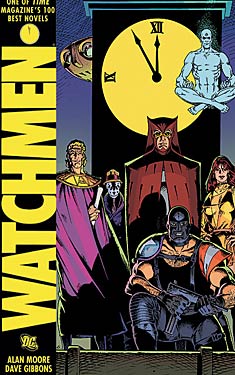
Watchmen

Alan Moore (Author), Dave Gibbons (Illustrator)
Completed 6/4/2022, Reviewed 6/4/2022
4 stars

I’ve always been interested in this graphic novel because it is on two lists on Worlds Without End, the Top Listed and Most Read Books lists.  So when I found the omnibus at Powell’s on sale, I got it, and wasn’t disappointed.  It’s a dark, gritty graphic novel about superheroes and the cold war in an alternate U.S. where Nixon is still president in 1985 and Gorbachev isn’t dismantling the Soviet Union.  Tension is incredibly high and the only thing that keeps the cold war from turning hot is the existence of one of the Watchmen.  While reading this, you have to remember it was written in 1985, and that it’s an alternate world, otherwise, you won’t get the anxiety of the population.  I remember that time, and I got the intensity of it.  This book won a 1988 Hugo for “Other Forms”.

So, in this alternate New York, one of the superheroes, Rorschach, believes there’s a conspiracy to knock them off.  The problem is, Rorschach is a possibly psychotic asocial who has killed his own share of people.  He tries to get to the bottom of the conspiracy, and along the way, runs into the rest of the now defunct Watchmen.  You see, they’ve been outlawed by an anti-heroes act.  Nonetheless, they don their costumes and try to figure out who’s killing them at a time when the US and USSR are on the brink of nuclear war.  Things escalate when Dr. Manhattan (the big naked blue guy) exiles himself to Mars and the USSR take advantage of the loss.  Can the remaining Watchmen find the killer and at the same time, prevent Armageddon?

It's a complicated plot, actually, as the graphic novel had twelve issues, and they follow the point of view of most of the Watchmen.  In addition, there are some side characters that act as a sort of classical chorus, as well as a character who is reading a graphic novel about a shipwrecked man trying to escape pirates.  So there’s a lot going on.  I really enjoyed getting the backstories of each of the Watchmen as the story progressed.  There’s also a previous generation of superheroes known as the Minutemen.  We get a lot of their backstory as well.  

Dr. Manhattan is pretty great.  He’s the only one who’s really “super” in that he survived a massive dose of radiation and was transformed into a powerful blue being.  He’s quite emotionless, although is affected by his relationships in interesting ways.  Rorschach is the epitome of creepy.  After a terrible childhood, he vents all his anger into his persona.  In fact, he’s the only Watchman whose real name and face no one knows.  Sally Jupiter is pretty great as one of the Minutemen, and her daughter Laurel is one of the Watchmen.  So at least there were some women in the groups.  

I was really moved by the story, freaked is more like it.  But I was pulled out of the story by the far-right and far-left split among the Watchmen as well as the population.  The right are Nazis and Klan supporters and the left are communists.  It seems like there’s no middle ground.  There are racist references, anti-Semitism, and a lot of hate speech.  If I read it when it first came out, I probably would have taken it more in stride, but it is pretty cringeworthy today.  And I know that it’s all done to make a point, but it is still hard to read.

I give this book four stars out of five, because the intensity of the book was broken several times by the hate content.  But this is a very dark story from a very dark time.  I’d say it’s still relevant today with the extreme political divisions and the fact that so few see any grey.


Monday, May 30, 2022

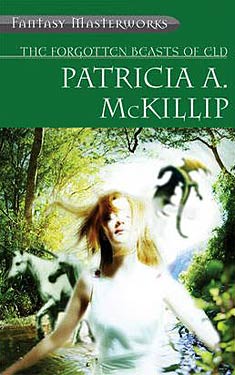
The Forgotten Beasts of Eld

Patricia A. McKillip
Completed 5/30/2022, Reviewed 5/30/2022
3 stars

I feel like a bad person giving this book only three stars.  It has the trademark McKillip prose (gorgeous and inspired), great world-building, and an inventive plot.  But somehow the parts did not translate to a satisfying whole for me.  It’s McKillip’s first novel.  It won the 1975 World Fantasy Award and was nominated for the Mythopoeic Award as well.    I just found out she passed away just three and half weeks before the writing of this review and I am devastated.  I have loved almost all I’ve read of her body of work and want to read more as time goes on.  So I feel even more like a heel for not appreciating this one more.

The story follows Sybel, a young girl who inherits several generations of wizardry.  She lives alone on the mountain of Eld with a small menagerie of fantastical animals with whom she can communicate.  Her only friend is a witch who lives nearby.  One day, a man from the nearby kingdom comes bearing an infant, insisting she take care if it.  She accedes, getting help from the witch as well as her beasts.  Years later, Coren returns to tell her the infant is actually the king’s son.  The boy, Tam, finds out and desires to be with his father.  Sybel calls the king the way she calls her beasts.  The king comes and Tam returns to the kingdom with him.  Coren returns several times, and after a terrible encounter with a powerful wizard funded by the king, Sybel agrees to marry Coren.  The thing about Coren is he is of a family that wants to kill the king.  Sybel sees this as an opportunity to take revenge on the king while hopefully saving Tam.

Sybel is a well-developed but icily cold character.  She does learn love by raising Tam and through her encounters with Coren.  However, her icy exterior makes it hard to like and empathize with her.  The other characters around her, Tam, Coren, the witch, and even the king, are more likeable.  I rather liked the witch.  Despite her isolation, she has a great way with people, unlike Sybel.  I liked Tam as well.  His longing to be with his natural father evoked the empathy I did not have for Sybel.  He turns out rather well-rounded though he lived on Eld with only Sybel and the witch for human contact.  I was also surprised by liking Coren’s war-mongering brothers, particularly Rok, who had a warmth that countered Sybel’s hard, cold nature.

The beasts were a wonderful part of the story.  There was a dragon, a lion, a wild boar, and several others who Sybel had power over.  She did love them and they loved her, despite her dominance over them.  The boar was a riddle master who could speak verbally.  He was the only one who could communicate with Coren.  The dragon was fun, hoarding gold and breathing fire.  I liked the lion the most, as he was like a huge teddy bear for Sybel and Tam.  

Altogether, though, I had a hard time enjoying the book.  I think not warming up to Sybel was the reason.  She left me as cold as her disposition.  I didn’t really care about her revenge on the king and I couldn’t understand Coren’s love for her.  He loved her so much that he renounced his own vengeance on the king for killing one of his brothers.  I know this is an unpopular opinion, as many, many readers gave this an average of about four stars on different sites, including my favorite, Worlds Without End.  It is apparently a favorite reread among many.  I guess you’ll have to read it yourself to make an informed opinion.  I give it an okay three stars out of five.  


Saturday, May 28, 2022

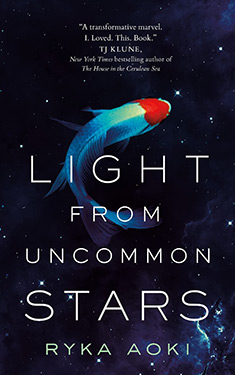
Light from Uncommon Stars

Ryka Aoki
Completed 5/28/2022, Reviewed 5/28/2022
4 stars

This book combines fantasy and science fiction with lesbian and transgender characters who play the violin and make donuts.  It’s certainly an odd combination of the genres, plot, and themes, which at times seem disjointed, but somehow, it really works.  The most powerful aspect of the book is that it has the most realistic, gut-wrenching telling of what it is like to be a transgender teen that I have ever read.  And yet there is a silliness that brings you back from the despair of the trans girl’s horrific experiences.  This book has been nominated for several awards so far this year, including the Hugo and the Mythopoeic.

Katrina Nguyen is the trans teen girl.  She’s runaway from her abusive home, landing in southern California in a largely Asian area.  She herself is part Asian, part Latinx.  What’s special about her is that she is a genius on the violin, another aspect of her life for which her father beat her.  She happens upon a master violinist in the park, Shizuka Satomi, who has sold her soul to the devil and is now trying to find a seventh and final soul to damn so that she can be released from her contract.  Shizuka takes Katrina in as a violin student.  But Katrina is different from the previous six young violinists she’s taught and damned, and the teen is not the only thing upending Shizuka’s life.  At about the same time, she meets Lan Tran, an alien who has escaped the Endplague from her home planet with her family.  They own a donut shop where they are also making a stargate.  Out of the blue, Shizuka falls for Lan, and all their lives intertwine as the time comes closer for the devil to have his due.

The plot is quite crazy.  The Katrina’s life experiences are very heavy and Shizuka’s Faustian deal is also quite dark.  At the same time, you have the kooky alien plot and the romance between Lan and Shizuka. But the characters and the storytelling are so rich that I didn’t mind the occasional disjointedness.

The story of Katrina is very, very intense, delving into the terrible experience of growing up trans, including the taunting, the parental abuse, sex work, rape, and even the trauma of simple tasks like trying to find a bathroom or go shopping.  It really made me empathetic towards her.  It is not an easy life and would not wish that sort of abuse and harassment on anyone.  And to know that attitude toward transgender persons exists today is revolting.  In the headlines of the day, a congressman blamed a mass school shooting on transgender illegal aliens, a pure lie.  So that is what Katrina deals with until she meets Shizuka.

Shizuka is also a terrific character.  As we read through the book, we get her background as well, one which made her feel the need to sell her soul to achieve the heights of the violin world.  She’s pretty ruthless and she knows it, which is why she herself is surprised when she finds herself attracted to Lan.  Lan is also terrific.  She’s captain of the ship that escaped from their home and mother of most of the crew, making for an interesting dynamic within the family.  Another character to watch for is Shirley, an AI that Lan created who also calls her mother.  

The prose is really good and the dialogue realistic.  The descriptions of the violin playing and listening are masterful.  It’s reminiscent of books like Song for a New Day and Gossamer Axe.  I really felt like I understood what it was like to play the violin as well as to be powerfully touched by it.  However, the science fictiony parts are glossed over and if I thought about it more, could probably find holes in the science.

I give this book four stars out of five.  It’s really powerful and entertaining.  However, the goofiness of the mixing of genres and the questionable science kept me from staying deep in the characters.  In the beginning, I thought I was going to cry a few times, but as the book progresses, it takes a step back from the deep emotional gut-wrenching, leaving me fulfilled but without the tears.  Nonetheless, I highly recommend the book and would honestly like to see this win the Hugo.