Jennifer Saint
Completed 1/13/2026, Reviewed 1/16/2026
2 stars
I did not enjoy reading this book. It suffered from the same issues as Heavenly Tyrant. We spend way too much time in the main character’s head. The book is almost all prosy descriptions of the internal struggle Ariadne experiences throughout her life. And she repeats the same things over and over again. Theseus is a savior, Theseus is a jerk, Dionysus is a savior, Dionysus is a jerk, my sister is self-absorbed, the Minotaur suffers, I suffer. Over and over again. This book is touted as a feminist retelling of the half-sister of the Minotaur and her relationship with Theseus and Dionysus. To me there wasn’t much feminism. I felt like she never had a self-actualizing moment and she always needed to have a man save her.
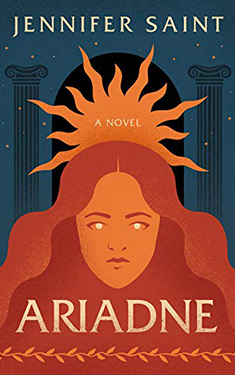
Ariadne is the daughter of Minos. Her beloved mother goes catatonic after giving birth to the Minotaur whom Minos eventually stashes away in a labyrinth, feeding him evil folks and Athenians. Ariadne takes pity on the Minotaur, both having the same mother, but is still afraid of him. She has a sister Phaedra who is boisterous and more outwardly self-centered. The two are very close nonetheless. When Theseus arrives as a sacrifice to the Minotaur, Ariadne plots with him to kill it and escape her raging abusive father. However, Theseus abandons her on a deserted island and tricks Phaedra into marrying him, eventually becoming the King and Queen of Athens. Dionysus saves her from death and they fall in love. Phaedra falls in love with Theseus’ son from his rape of the leader of the Amazons. And everyone wants revenge against everyone. A very Greek tragedy.
I wanted to stick pins in my eyes during the first hundred or so pages of this book. Despite my love of Greek mythology, I found the events leading up to Theseus’ arrival mind numbing. It is almost all told from Ariadne’s POV. There are chapters from Phaedra’s POV as well, but they mostly come later. We spend all that time in Ariadne’s head as she ruminates on the same things over and over. The book got more interesting when narrated by Phaedra. She’s much more action oriented and has much more stoic and go-getter personality. Things happen in Phaedra’s chapters. The action in Ariadne’s chapters are lost in the mental anguish and reflection prose. I never felt connected to either one and had no empathy for their situations. Yes, it was all terrible and mostly abusive or manipulative, but I felt like a third party watching from afar, not wanting to get close to this shit show.
Greek mythology is full of huge egos, manipulations, sexual violence and abuse, and misogyny. But I felt it was done much better by Madelaine Miller in Circe. Yes, you’re in the head of an abused and maligned woman, but you want to be there. I so didn’t want to be in Ariadne’s head. After reading about two-thirds of the book, I jumped onto Wikipedia to read up on the actual story to see how close it was following the original myth. Of course, being mostly passed down orally, there are multiple versions. But I got the gist of it. This book does follow the myth, though I think the author could have done so much more with it. Instead, it felt like a dry novelization.
I give this book two stars out of five. I was going to go a little higher, but after reflecting on it, I remembered how terribly bored I was by the prose. Saint has written several books that retell Greek myth but I have no interest in following up on that. Madeline Miller is much better at the retelling/reinterpretation game.

No comments:
Post a Comment