Adrian Tchaikovsky
Completed 1/26/2026, Reviewed 1/26/2026
5 stars
This book blew my socks off. This is excellent space science fiction without being a space opera. In my mind, and in the definition from several sources, a space opera is piece of fiction set in outer space with a typically simplistic and melodramatic nature. This was anything but simplistic or melodramatic. This was high drama featuring the evolution of uplifted spiders and the frustrations of a colony ship looking for a final home for the human race. Despite taking nearly two weeks to finish this 600-page doorstopper, I ate this up. This book won the 2016 Arthur C. Clarke award.
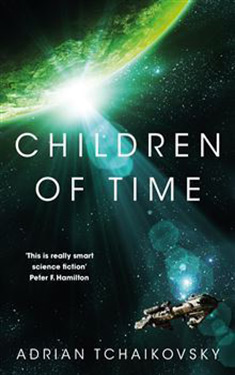
The book opens with a planet that has been terraformed for colonization by humans. However, as an experiment, a ship is about to plant monkeys on the planet with a virus constructed to uplift the monkeys, that is, to make them evolve into sentient beings quickly, hopefully similar to humans. As the last survivor of an accident with the ship, the mastermind of the experiment, Kern, escapes to a shuttle and uploads her brain into its computer and hibernates. The shuttle, as it orbits the planet, sends messages down, awaiting a response from intelligent monkeys. Several thousand years later a colony ship from Earth containing the last surviving half million humans approaches the planet. However, the shuttle doesn’t let them land to protect her monkeys, forcing them to look elsewhere for a new home. Thus begins a conflict with the shuttle and on board the colony ship. Meanwhile, an unexpected species begins to evolve. Spiders.
A long plot summary for a long book. The third person narration alternates chapters between the Kern and the evolving spiders, and later, between the spiders and a classicist on the colony ship named Holsten. This provides an amazing narrative following generations upon generations of spiders. It initially follows one, named Portia and her descendants, also named Portia. While sounding strange, it gives a sense of continuity to the story, despite being different spiders. It also follows Bianca and eventually, Fabian, a male spider. Each spider character changes as the evolution progresses but keeping the names consistent over time was a stroke of genius. Their character development goes from simple primal survival to full on mature personhood in a bio-tech society. Sure, spiders are creepy, but being inside their minds over the centuries induces amazing empathy.
As for the humans, Kern is a dangerous megalomaniac. When she uploads her mind to the shuttle, the result is terrifying. On the colony ship, Holsten provides continuity with the human past, which becomes useful for translating to the old Empire language of Kern. Holsten is a gentle soul, one of the oldest members of the Key Core crew. He observes as well as participates but always seems to pause to consider the humanity of a given situation and of the actions of his crewmates. He provides a great counterpoint to the more A-type personalities of the other leaders of the ship. Despite there being a captain, a lead engineer, a lead security officer, and a lead scientist, Holsten is the one who has more introspection as he bounces in and out of hibernation. He’s basically the moral barometer of the remnants of the human race.
There are a lot of themes running through the narrations: the cost of survival, the definition of sentience and of what we would call humanity, equality of the sexes, religion, war, and technology. It’s chock full of interesting insights that the spiders have as they grow as a species. And it’s an interesting reflection on the human civilization that destroyed Earth. It’s powerfully presented without being preachy. I was constantly amazed at how it all played out as the spiders evolved.
I give this book five stars out of five. I loved everything about this book, from the style of prose to the amazing climax. I approached it cautiously because I had heard nothing but glowing reviews from friends whose reviews I usually agree with. This book has been on my TBR pile for a long time. As I said in previous reviews of Tchaikovsky, I regret having waited so long to get to it. Now I can’t wait to jump into the rest of the series. If you’d like to check out a shorter Tchaikovsky novel first, do read Service Model. It was one of my favorites from last year.