John Wyndham
Completed 9/22/2025, Reviewed 9/23/2025
4 stars
This is a golden age Sci Fi story by the man who wrote “The Day of the Triffids.” I never read that book but the movie scared me as kid. So when my book club selected this, I was excited. I wasn’t disappointed. This book was riveting for being seventy years old. It had an immediacy that sucked me in quickly and never really let me go. As many books are from that time period, it’s a post-nuclear war tale of mutations and survival. Here, anyone who doesn’t have traditional body parts is a deviant in the eyes of God and must be exterminated: humans through forced sterilization or murder and crops and livestock through burning. But when a new variation appears in the form of telepathy, a new threat arises that must be exterminated.
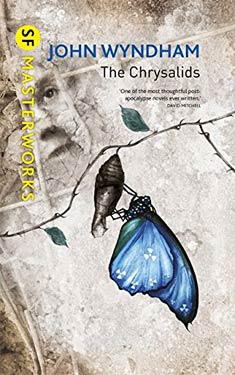
David is a ten-year-old in what was formerly Labrador, Canada. He meets a little girl named Sophie who has six toes, but hides them to avoid scrutiny and persecution from the town’s purity movement, which is led by David’s fire and brimstone puritanical father. When Sophie is exposed, her family runs into the Fringes to save Sophie from sterilization or worse. David is beaten for not reporting her. This is the first time David begins to question the Purity laws and the authority of his oppressive and abusive father. Fortunately, David has been hiding his telepathy, which he always thought was normal, but has found out he only shares it with seven other children his age. When his mother bears his new little sister Petra with no physical deformities but a massive telepathic presence, David and his friends try to take care of and train her. After some years, Petra announces that she can communicate telepathically with someone very, very far away. But when the townspeople figure out that they are telepathic, David, Petra, and his cousin Rosalind run for the Fringes, while salvation seems to be coming from the very, very far island of Sealand.
While the premise is old hat for a golden age novel, I thought the execution was excellent. I was riveted by secrecy of the telepathic children and disgusted by the Purity laws. It felt like the red and lavender scares of McCarthyism and the brown and trans scares of Trumpism. David’s father Joseph has no tolerance for any deviation from “God’s image,” i.e., the definition of humanity, as defined by one of the few remaining books in Labrador, “Repentances.” Even when Joseph’s sister-in-law shows up with an infant with a very minor deformity, Joseph rebukes her and she and the child wind up dead. It is all as heartbreaking and terrifying as the current Christian Nationalist/fascist environment today.
I was impressed by the character arcs of the main players in the story. One of my favorite characters was Uncle Axel, David’s confidant. He seems to be the only adult with a healthy but cautious view of life in this post-Tribulation era. Nothing is really known of the rest of the world, but Axel believes that change is nothing to be afraid of and should be protected. He provides David with progressive and adult support.
There are several strong female characters, surprisingly, though the book is narrated by David. Rosalind, his cousin and love interest; Petra, his young uber-telepathic sister; Sophie, the six-toed girl; and the Sealand woman all have insightful observations and dialogue. Rosalind is also a kick-ass archer. One would think that all the wisdom would come from the men considering the publication date of this book. However, the female characters are portrayed with intelligence, strength, and dignity.
I give this book four out of five stars. It’s a quick, exciting read. It feels fresh despite being one of many post-nuclear apocalyptic novels of the post-WWII/Cold War era. The prose is tight and the world-building well-defined. Strong characterization and universal themes of competing moralities make this a worthwhile read today for its vision of a near-future full of fear of change and hatred of the other.

No comments:
Post a Comment