Wednesday, November 4, 2020

Semiosis

Sue Burke
Completed 11/4/2020, Reviewed 11/4/2020
5 stars

The book is like a collection of short stories about the founding and development of a colony ship from Earth that lands on a planet they call Pax.  The goal is to create a new Earth without making the same mistakes as they did on Earth.  In a way, this book is reminiscent of Bradbury’s The Martian Chronicles, but the stories go together much more directly and sequentially.  They were not written independently like TMC.  This book is also about first contact, with the life on the planet and with another alien race that had settled on the planet about 400 years earlier.  It’s a marvelous book which sucked me in right at the beginning and held me until the end.  It was nominated for four awards, including the Golden Tentacle which is awarded for a debut novel that meets the criteria of progressive, intelligent, and entertaining.
A colony ship lands on a planet that has evolved one billion years longer than earth.  They find the plant life and some of the animal life to have some form of sentience.  They try to create a new paradigm for civilization.  At first, the plants seem to be symbiotic with them, then they turn against them, then they come to have a relationship with a rainbow bamboo plant that may be the largest living thing on the Pax.  Eventually, they learn to communicate with the plant, named Stevland.  They also find evidence of an alien race that lived in a city of glass bricks and domes whom they call the Glassmakers.  But as with any new group, there is fighting and dissent as they grow and develop, despite the name Pax.  And there is constant battle with the elements, some of the animals, and eventually, the Glassmakers.

The characters development is marvelous.  Each chapter is told from the perspective of one of the characters of that generation, and I became attached to each one.  I hated seeing each chapter end because I wanted more info about their narrators.  But like a collection of short stories, they are each an amuse bouche.  The amazing thing is that each character is very unique as is their speaking style.  While I loved all the narrators, I particularly loved the rainbow bamboo, Stevland.  He (which I use because the other characters do) begins as an aggressive predator trying to draw the Pax community into a symbiotic slavery to care for and nurture it.  But as time goes on, it becomes attached to and eventually part of the community.  Daresay, Stevland becomes human.

The writing is faced-paced, with some sort of conflict propelling the narrative in each chapter.  It’s not very prosy, but Stevland’s narration is very descriptive in how it processes data in relationship to the humans, the other plants, and the native animals it has a symbiotic relationship with.  It’s quite astounding actually, and very believable.  Stevland also goes into detail on how it and other plants can modify themselves to produce substances in their fruit and other parts so that eaten, the consumers have the desired effect.  They can make poison, medicine, narcotics, and nutrients.  That’s how the plants manipulate their environment.  All of this sounds like hard science, but the author makes it all very accessible.  I did not stumble over the science and speculation at all.

The book is about community, change, and xenophobia.  It deals with the other as the humans form symbiotic relationships with the plants and animals of Pax.  The xenophobia becomes much more apparent when the community is confronted with the Glassmakers.  There’s infighting in the group as to whether they can establish friendship with them or should exterminate them.  It is not an easy choice as the Glassmakers see the humans as invaders as well. 

I give this book five stars out of five.  I really loved it.  I found it a fascinating take on first contact.  Reading other reviews, I guess the intelligent plants trope has been done before, like Day of the Triffids or more humorously in Little Shop of Horrors.  But I don’t know if it’s been done to this effect.  The book is very readable despite sounding hard-science-y.  This is the first book of a duology, so the ending is a little less than satisfying, but the ride was so good, I want to read the sequel.

Wednesday, October 28, 2020

The Complete Fiction of HP Lovecraft

HP Lovecraft
Completed 10/28/2020, Reviewed 10/28/2020
3 stars 

I think I learned a lesson with this collection.  Never read a complete works by any author.  After a while, you see the flaws.  I found the same words and phrases used over and over again.  Lovecraft’s approach to horror is to not describe it in too much detail, but to use words like horror and terror repeatedly.  I guess he leaves it to the reader’s imagination, but by the last story in this collection, I was tired of it.  I felt like the only differences between the stories were the settings.  Okay, so not all the stories were repetitive, but the Cthulhu mythos stories got old after a while.  I have to say I was disappointed, but perhaps it was my fault in reading sixty-eight stories consecutively. 

I read this for the WWEnd Halloween Challenge for 2020.  I thought it would be fun to read some horror, and I always felt that I should read some Lovecraft as he is an influence on so many horror and fantasy writers.  So when this book came up as a cheap Amazon Deal of the Day for my Kindle, I bought it.  Well, it took me three weeks to read the 1095 pages.  It started out fun, but soon I began to recognize the formula of the stories.  For a large part of the stories, there’s an introduction to the main character, be it first or third person, that tells you that the person is dead or on the verge of sanity.  There’s a prosy description of the setting.  Then there’s a recounting of the horrific events that lead up to the death or mental breakdown.  This was typical of the Cthulhu mythos stories.

There are other forms as well, such as the stories in what’s known as the Dream Cycle, which I had a hard time understanding.  The stories which are not part of either Cthulhu or the Dreams still sometimes fell into the Cthulhu pattern of storytelling.  You could tell when you were reading some of his early works because they ended in an italicized shocker last sentence.  Those were actually kind of fun.

The prose is wonderful, as I would have expected from writing from this period in time.  However, each story is a big prose-fest.  There is almost no dialogue.  When there is, it’s long, prosy, eloquent monologues or heavily accented backwoods ramblings.  This lack of dialogue made the characters all seem basically the same.  There was not much individual personality to them.  Most of them were men, often academics, who were researching old cults and/or the occult, troubled by dreams, and obsessive.  There were almost no women in any of the stories.

Most of Lovecraft’s work was published in periodicals, like the science fiction of the golden age.  I think if you read his stories as they came out, over a period of many years, you could really get into it.  You wouldn’t notice the commonly used words and phrases, the lack of growth in the writing, the repetitive themes.  My conclusion is that reading it all at once is a bad idea. 

And what review of Lovecraft isn’t complete without the acknowledgement of his intense racism.  He uses derogatory language for anyone who isn’t white or of British descent.  He used such language for Blacks, Asians, Native Americans, Asian Indians, Arabs, Italians, and people of mixed race.  I’m sure I’m missing a few.  I knew he was racist going into this and chalked it up to the time period he was from.  But I quickly realized that while many authors were racist, they didn’t usually use derogatory words or stereotypical descriptions in their writings.  And Lovecraft goes too far.  He describes every non-white character with a slur.  They are almost always associated with the horror involved, whether perpetuating it or a slave to it.  It made for some really uncomfortable reading.  I really like this quote by N. K. Jemisin from an interview with David Remnick from the New Yorker magazine.  "…His biases were the basis of his horror. ... He does some incredible imagery, it's powerful work, but it's frightening ... because it's a way to look into the mind of a true bigot, and realize just how alien their thinking is, just how disturbing their ability to dehumanize their fellow human beings is."

I give this book three stars out of five.  It was interesting reading this collection after reading so many books by authors of color over the past few years.  And it was interesting reading it during such a troubling time as we are in now.  It reinforced for me how far we’ve come and simultaneously how much farther we have to go.  I think I would have given this collection four stars if it wasn’t for the racism and the repetitive style and language of the stories.  If you’re into prose, you’d see why I’d give it the fourth star.  But in the future, when I read collections, I’ll make sure it isn’t massive.  I like to be entertained and challenged.  I don’t like finding out that an author has a formula and sticks to it their whole career.  And I think I’ll stay away from the racists.  It’s hard enough to do that in everyday life.  I don’t need it in my literature as well.

Tuesday, October 6, 2020

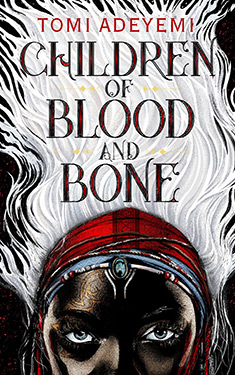
Children of Blood and Bone

Tomi Adeyemi
Completed 10/6/2020, Reviewed 10/6/2020
3 stars

 I enjoyed this young adult novel, but it felt very formulaic.  It has a good premise.  A girl tries to bring magic back into a Nigeria-like land after it has been eradicated by the monarch.  It’s loosely based on Yoruba mythology.  The primary purpose of each god is to bestow a certain type of magic.  It’s basically a quest story with a kick-ass female main character named Zelie.  Many cool things happen on this quest, but ultimately everything feels like you’ve read it before, right down to Zelie falling for the morally questionable antagonist.  Still, it was an exciting, engrossing story.  I just kept having feelings of déjà vu.  This book was nominated for a lot of awards, winning several including the Andre Norton Award. 

In Orisha, the monarch has eradicated magic from the land and killed all the wielders of magic above the age of thirteen.  Called maji, they’re recognizable by their white hair.  Those under the age of thirteen, though white-haired, haven’t acquired their powers yet, so are considered not dangerous.  Zelie lost her mother to the Raids and is rightfully bitter.  She has white hair and has the potential to be a maji.  Several years after the Raids, she becomes involved with bringing magic back when the Princess steals an artifact from her father that can return magic to the land.  Zelie, her brother, and the Princess take up the artifact and begin the quest to bring magic back.  Hot on their heals is the Prince, who supports his father’s vision of a magic-free land.

The book is told from first person point of view by Zelie, the Princess, and the Prince in alternating chapters.  This form develops their characters really well.  Zelie is a great character.  She’s well-rounded despite being bitter over the death of her mother and the Raids which killed all the maji of age.  She‘s strong, having been trained to defend herself like many of the young girls of her village.  The Princess is also strong and fierce, having been trained by her father to defend herself in case of an uprising, like the one in which he lost his first family.  She struggles with the injustices perpetuated on the maji which emboldens her to steal a scroll which when touched, restores magic to them.  The Prince, despite being the antagonist, is also a well-developed character, getting his own narrative. 

Though the characters are strong, the story feels hackneyed.  That’s not saying it’s not exciting, because it is.  It just feels like it’s been done before.  But the story is well paced, and I often found myself having a hard time putting the book down at several points.  There’s a lot of action and a lot of sequences that are real page turners. 

The one thing I really liked was the realness of the oppression the maji suffered at the hands of the royal guards.  They called them maggots and were heavily taxed.  What they endured was very realistic and often hard to read.  The account of the death of Zelie’s mother is particularly difficult.  It’s an excellent handling of xenophobia and the demonization of the other.  Contrary to the belief of the king, it doesn’t protect him, it merely incites resentment and ultimately violence.

I give this book three stars out of five.  I really liked it, and would have liked to have given it four stars. But ultimately, it felt derivative of other YA novels.  I do highly recommend the book though.  It is a good read and satisfying despite the cliffhanger at the end.  And one more plug.  The cover art of this book and its sequel is tremendous.


Thursday, October 1, 2020

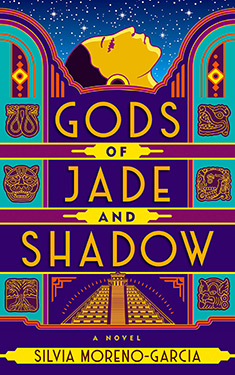
Gods of Jade and Shadow

Silvia Moreno-Garcia
Completed 10/1/2020, Reviewed 10/1/2020
4 stars

I believe this is the first genre novel I’ve read by a Latinx author, perhaps the first of any type of literature.  Moreno-Garcia is Mexican-born and Canadian “by inclination”.  This novel is Mythic Fiction, featuring Mayan gods and a lowly Cinderella-like poor relation.  It is about the battle for the Kingdom of the Underworld between twin brother gods.  It is both light and heavy, with powerful themes of love and self-sacrifice, while sprinkled with a little humor.  I really enjoyed the novel, particularly the exposure to the Mayan mythology, of which I know very little.  And I’m always up for a good fantasy based on mythology.  This book was nominated for several awards including the Nebula.

The story begins in the Yucatan in the roaring twenties, although the town where Casiopea lives is very traditional.  Her father died when she was young and she and her mother moved in with her sickly, cantankerous, and abusive grandfather and equally abusive extended family, including her mean cousin Martin.  She was basically raised as a servant, much like Cinderella.  One day, left home alone while the rest of the family is enjoying a day trip, she finds the small box her grandfather kept in his room.  For the first time, its key is not around his neck, but on the dresser.  She opens the box, finds bones in it, touches it, and a shard of bone enters her hand.  Suddenly, the god of the Underworld, Hun-Kame, appears.  He enlists her to help him retake his throne from his twin brother Vucub-Kame, the younger of the two, who treacherously stole the throne from him.  The story becomes a bit of a travelogue as they journey across Mexico, being chased by Martin who was enlisted by the younger sibling, culminating in an ultimate confrontation between the two divine forces. 

Casiopea is a wonderful character, named after the constellation by her poet father of Mayan ancestry.  Being her father’s daughter, she is dark-skinned, unlike the rest of her family who are lighter-skinned people of European descent.  The resulting bigotry is what keeps her and her mother oppressed by their own family.  Casiopea keeps to her station, as commanded by her mother, but she does so with dissent and bitterness in her eyes, often arguing, garnering the wrath of Martin, her grandfather, and her aunts.  She is smart, educated, and strong-willed, unlike many of the women of the village.  Then on the journey across Mexico, she brings a freshness and a humanness to Hun-Kame.

What brings Hun-Kame to life is the blood of Casiopea, as it is absorbed by his bone shard lodged in her hand.  It also siphons some of her humanity and personality into him as well.  Ultimately, though, this will kill her unless he can retake the throne and remove it from her.  But if he wants to live, it must remain in her hand, endangering her life.  Hun-Kame is a well-developed character, starting off disaffected and becoming softened by Casiopea’s physical and emotional connection to him.  Vucub-Kame, on the other hand, is hardened and harsh, like Martin.  The contrasts are awesome, and the coming together of the characters and the personalities is well played.

I really liked Moreno-Garcia’s prose.  She writes vivid depictions of people, places, and actions without being overbearing, but still maintaining a mythic quality.  The dialogue is crisp.  There is some exposition as Hun-Kame relates the story of his divinity and the conflict with his brother when asked by Casiopea, but it is written well, told over a several sittings, and is very interesting. 

I give this book four stars out of five.  It was very nearly a five-star rating.  I could empathize with Casiopea and Hun-Kame, but never quite had the emotional response for which I usually reward the higher rating.  Still, I enjoyed it very much.  It is a quick read, with the travelogue and the exposition never being boring.  The final confrontation between the two brothers, the form of which I won’t give away, was dramatic and riveting.  There are a lot of stories out there featuring Norse, Egyptian, Hindu, and African mythologies, but this is first I’ve come across with Mayan.  I highly recommend this book if you’re looking for something with a different flavor than the majority of mythological fiction out there.

Monday, September 28, 2020

Timescape

Gregory Benford
Completed 9/28/2020, Reviewed 9/28/2020
2 stars

I did not enjoy this book.  It’s classified as hard science fiction, and yes, it’s very hard.  The author goes into excruciating detail about tachyons, hypothetical faster-than-light particles, used to communicate across time.  The book is generally about the scientists from the future attempting to send messages to scientists from the past to get them to do something to avoid an ecological collapse.  But what I felt this book was really about was scientists and their lives inside and outside the lab.  According to this book, it’s not usually pleasant.   There’s in-fighting, jealousy, power struggles, and many problems at home.  Despite this book being published in 1980, it felt more like a book out of the golden age of science fiction, with its racism, sexism, and homophobia.  These are relatively mild except for the depictions of women which are so 1950’s.  This book won the Nebula, British SF, and Campbell Awards.  It was not nominated for a Hugo.

The plot follows two timelines.  The first is 1998 where several scientists at Cambridge are sending signals in the form of Morse Code via tachyons to the second timeline, 1962 (18 years to and from the book’s publication date).  In 1998, there is an algae bloom rapidly spreading in the ocean due to certain long chain molecule pesticides and the destruction of the rain forests.  The message they are sending to 1962 contains details of the pesticides and warnings about what their effects will be on the future.  They are also trying to get funding to maintain their experiments at a time when scientific funding is hard to come by as it is being diverted to fight the ecological disaster.  In 1962, one scientist and his grad student at UC La Jolla discover these messages as interference in their own experiments, but their department head doesn’t believe in it.  The two continue gathering and studying the messages despite being warned to abandon the task and focus on eliminating the noise from their original experiment. 

I liked the basic gist of the plot.  It’s well-conceived and not badly executed.  I actually found the writing to be quite good.  I may not have enjoyed the content, but I thought it was written well.  What I didn’t care for were the subplots, particularly those revolving around the relationships of the scientist, almost all of whom were white men, and their wives, girlfriends, or sexual partners.   The wives of the British scientists were good, long-suffering housewives.  The live-in girlfriend of the American scientist came across as somewhat liberated considering they weren’t married but she was also a Barry Goldwater supporter.  There were a few women scientists, one in 1962 and one in 1998, but only the latter was featured enough to know something about her, that she was bisexual with stereotypical butch tendencies.  The worst subplot followed the despicable Ian Peterson, the government guy directly responsible for deciding the funding for the 1998 project.  He believed every woman was fair game, including the wives of the scientists he was working with. 

That brings me to characterization.  This was interesting because even though there was a lot of background given for Peterson and the main scientists, I didn’t feel like I got to know any of them.  Renfrow and Bernstein were tortured and for that matter, kind of whiny.  Bernstein has perhaps the fullest background, complete with Jewish mother and goy girlfriend conflicts.  I didn’t empathize with either one, although in the beginning, I came close with Bernstein.  I’ve already described Peterson and the women characters, all basically very cardboard. 

The racism is one incident, but it’s there and pretty offensive.  One of the main characters sees a black man hanging around people (presumably all white) waiting for a bus in the rain and the character assumes, in this case rightly so, that he’s a pickpocket.  Granted, there were probably extremely few black people in academic circles in La Jolla in 1962, but there are also none in 1998 in England or California.  The homophobia was quite stereotypical as well.  Besides the butch bisexual women, one of the characters makes reference to how all waiters are gay.  Well, at least the author didn’t comment on limp wrists and swishing behinds.  Still, ugh.

I give this book two stars out of five.  Just because the writing is decent and the science is detailed doesn’t make a book good.  I need to have engaging characters.  I need to find the subplots interesting.  I’d rather have no references at all to blacks and LGBTQ characters than offensive ones.  That way, I could have pretended that the author was writing in the 40’s or 50’s.  I can’t believe this book beat others like The Snow Queen and Shadow of theTorturer for two of the aforementioned awards.  After reading this book, I’m not likely to read anything else by Benford. 

Friday, September 25, 2020

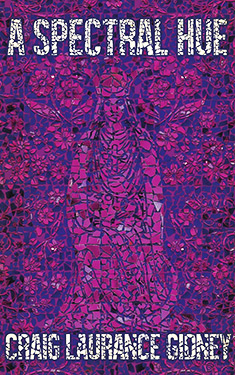
A Spectral Hue

Craig Laurance Gidney
Completed 9/22/2020, Reviewed 9/22/2020
5 stars

When I began this book, I was a bit disoriented.  I loved Gidney’s Sea, Swallow Me and was fully expecting to love this one.  Expectations ran high.  To my dismay, it started a little slowly.  The book is told from multiple points of view and it took me quite a few chapters to really get what was going on.  Then the plot started to sink in and I got it.  I got the layers of meaning, the smart prose, and the colorful characters.  It all wove together into a terrific, non-traditional ghost story, using artistic obsession as its medium.  This book was nominated for a Lambda Literary Award in 2019. 

There’s a museum in the tiny town of Shimmer, Maryland that features quilts, paintings, and assorted other forms of art by people who were not trained artists.  The quilts were made by a young slave woman, the paintings by a drifter with a skin condition, bottle art by someone living off the grid of the 1950s, etc.  All the art pieces have a common color in them, a purplish-pinkish hue.  The people who created the art were all obsessed with their work and this color.  People who see the art are affected in different ways.  Some see nothing but amateurish drivel.  Some see the beginnings of a modern art movement.  A select few see a magic and become obsessed artists themselves and it all points to something in the marsh that surrounds the town.

As I noted above, there are a number of characters through whom the story is told.  Xavier is a grad student who comes to Shimmer to study the quilts.  He first saw one of the quilts, made by Hazel the young slave girl, at a party and became obsessed with them.  Linc is a young gay former crystal meth addict who was kicked out of his home.  He drifts into Shimmer and becomes a janitor at the museum.  Iris was a psychic since childhood, seeing spectres and auras.  She lives in Shimmer, her ex-partner having passed away about a year before.  All these people come to experience the obsession with the art in one way or another.  There is another voice, that of the spectre itself, only known as Fuchsia, who seems to be the source of the obsession.

The character development is quite good for such a short novel.  It’s only 177 pages, but we get a lot of personality out of the characters.  In addition to the characters noted above, we also find out a lot about Hazel through the narration by Fuschia, learning how she deals with being a slave and how she comes to make the quilts. 

The book also deals with race, sexuality, and slavery.  Most of the main characters are black and gay or lesbian.  It’s not pronounced, but racism and homophobia are part of some of the characters’ experiences.  The characterization is subtly written with passing references to things like physical features and gaydar.  More dramatic is the story of Hazel’s enslavement, though she has “kind” owners who don’t whip their slaves at the drop of a hat or cut off fingers or limbs.  They “only” box their ears, sell their children, and beat them when the master’s drunk. 

I give this book five stars out of five.  I really empathized with the characters, feeling their growing compulsion to create.  I especially felt this with Iris and Linc’s stories, although I wish got more of Linc.  His story enthralled me the most, finding it an intense ride.  I loved Gidney’s descriptions of the creation of the art by the different main and secondary characters.  And I love Gidney’s writing.  His prose is spare, but he creates vivid images of the people and their art.   I think you have to read this book slowly because you don’t want to miss any of the words.  It took me about as long to read this book as the it did the last one which was a hundred pages longer.  The beginning is a slow burn, but then I didn’t want it to end.  I just wanted to savor the experiences of the creation of art and the passion of the people. 

Tuesday, September 22, 2020

The Lesson

Cadwell Turnbull
Completed 9/20/2020, Reviewed 9/20/2020
4 stars

I found this book by a recommendation of an author I follow on Twitter.  I was pleasantly surprised at how much I enjoyed it.  It’s a first novel by an African-American native of the US Virgin Islands.  His previous works were short fiction pieces, a few of which have been included in anthologies, including Year’s Best Science Fiction and Fantasy 2019.   It has strong prose without being pretentious.  It has a fairly large cast of characters, much like a disaster movie of the ‘70s – well not that many, but the plot follows quite a few characters to tell the story.  It’s short, but packs a big punch with the horrors of colonialism and slavery as themes.  It wasn’t nominated for anything, but received a lot of good press, and I expect to see very good things coming from this author in the future.  I think he’s one to follow.

The story takes place on St. Thomas in the Virgin Islands.  In the very near future, an alien craft comes to earth and hovers above the island.  The aliens say they’ve come in peace, wanting to give us new cures for diseases and new technologies in return for peaceful cohabitation.  However, when someone crosses an alien, it quickly and mercilessly kills that person.  This causes misunderstanding and heightens tensions resulting in more violence.  Mera is the Ynaa ambassador to Earth.  She has been around a long time, posing as a slave and after emancipation, as a healer.  Now that the full contingent of Ynaa have arrived, she acts as an intermediary with the people of St. Thomas.  She hires Derrick, a local young man, as her secretary.  With the rise of violence and misunderstanding, Derrick is believed to be a traitor by the locals.  The story follows his childhood friend and one-time girlfriend Patrice and the members of both of their families from the few weeks before the Ynaa arrival to five years later.  It also gives us vignettes of Mera’s previous time on Earth in the 17-, 18-, and 1900s. 

The characterization is pretty good considering the number of characters and the shortness of the book (barely 290 pages).  I felt I could empathize with most of the characters, particularly Derrick, Patrice and her father Jackson.  Jackson is a teacher who retires after the arrival of the Ynaa.  He and his wife Aubrey split and Aubrey falls in love with the local veterinarian Alice.  While Aubrey has moved on with her life, Jackson struggles to find meaning and direction in his.  Mera the alien ambassador is a bit wooden, but it works in that she’s trying to maintain emotional distance from humans, and also because there’s a sort of wooden way she and the other aliens walk and move.  The aliens wear a mask of human features, but can generally be picked out of a crowd by the way they walk. 

The story is really gripping.  It starts with a brief introduction of the major characters in their lives right before the invasion, then jumps to five years later when tensions are high and humans have been murdered after attacking the aliens.  Even with the bouncing timeline to give Mera’s background on Earth for the past couple hundred years, the author maintains a brisk pace and the tensions increase. 

The metaphor for colonialism is pretty obvious, sort of the way District 9 was an obvious metaphor for apartheid.  But it works well, particularly as the author goes back to a slave revolt during the Dutch occupation of the island in the 1700s.  It also calls to question the morality of working with the occupiers in the character of Derrick who is Mera’s secretary.  He took the job because it was high paying and because he was infatuated with this first contact.  But is he the traitor that everyone says he is.  Even his grandmother kicks him out of the house for getting too close to Mera.  He’s sort of like the tax collectors of Roman-occupied Israel in Jesus’ time. 

I give this book four stars out of five.  I think it’s a terrific first contact novel with a different setting in a culture we have too little exposure to, considering it’s part of the United States.  I think the book is well written and pretty imaginative.  In the acknowledgments, Turnbull says that he was a kid with lots of strange ideas.  After reading this book, I’m hoping he gets to write down more of his strange ideas.