Robert J Sawyer
Completed 4/21/2025, Reviewed 4/21/2025
4 stars
I haven’t read any Sawyer in a few years, but I’ve read three of his books previously. I enjoyed all three, Hominids, Calculating God, and The Terminal Experiment, giving them three or four stars, so my hopes were high for this book as well. I wasn’t disappointed. This 2000 Aurora Award winner (the Canadian SF book award) was a fast-paced, very readable contemplation on the effects of knowing the future and what we do with it. It was couched in a hard science fiction story concerning an experiment at CERN gone wrong. I enjoyed this book so much, I read it in one night. Well technically, I read the last 30 pages early the next morning because I couldn’t keep my eyes open at 1:30 a.m.
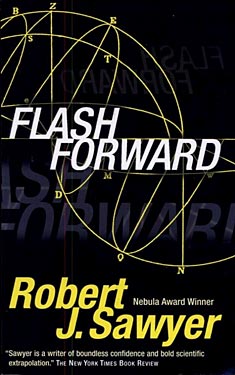
The book follows three physics researchers: Lloyd, Michiko, and Theo. When their experiment goes awry, everyone in the world passes out for just under two minutes. During that time, everyone sees themselves as they are thirty years in the future, just enough time to figure out their surroundings. When they wake up, they find disasters all over the world from planes and cars crashing and people falling to their deaths. The three, as well as the other researchers in the lab, try to figure out what happened and if they are really liable. Lloyd and Michiko are engaged, but they see themselves not together in the future. Theo sees nothing, which indicates he must be dead though he is only twenty-seven-years-old in the present. Theo goes hunting for the reason for his death. Lloyd and Michiko inter existential crises over their relationship. And the ultimate question is, can the future be changed or is it fixed.
I thought the premise was well developed. Written in third person, mostly from Lloyd and Theo’s perspectives, the narrative jumped between them just often enough to keep the plot going quickly. I was in awe of how much philosophy, physics, and relationship drama could be drawn out to convey the premise without getting soapy. Now, some may argue that it is soapy, but I thought it was decent human drama. The climax was exciting, with a terrific ending, although I could have done without the last chapter. It’s the only part that I didn’t like where it went.
The three main characters were believable, especially Lloyd and Michiko. Lloyd tries to convince the world that there is no free will, that the future is static. He must believe this to absolve himself of the guilt over the deaths of so many people because of his experiment. Michiko believes it is changeable. Always the warm, intense, and hopeful person, she doesn’t believe in predestination and is convinced Lloyd is wrong. Theo, upon finding out that he was murdered, believes he must try to change the future and pursues all information he can gather about his demise in hopes of avoiding it. He’s young and brash and quite the arrogant wunderkind. Still he is likeable despite not thinking through most of his decisions.
This book, like the others of Sawyer's I read, all have the same style of writing. Not much prose and a lot of action. But this book also has long stretches of the philosophy of time and physics and cosmology in layman’s terms. It was easy to follow, even for someone like me who flunked out of his physics major in college. I give this book four stars out of five. It grabs you quickly and keeps you reading throughout the book. I found myself reading close to forty pages an hour because I was so engrossed in it. It was a stark contrast to the ten pages an hour I was reading for the last book, with a quick dozing off at about that one hour mark.