Tuesday, June 16, 2026

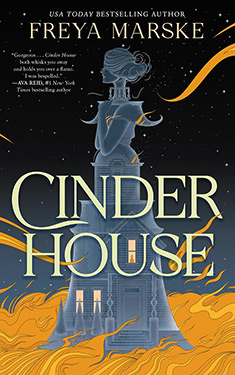
Cinder House

Freya Marske
Completed 6/14/2026, Reviewed 6/15/2026
5 stars

There are many takes on classic fairy tales.  This time, it’s Cinderella, and Ella is a ghost haunting a house.  Despite being another retelling, I was blown away by the complexity.  It was smart, funny at times, and quite intense.  This is another nominee for the 2026 Hugo Novella.  I think it deserves the nomination just for making the trope feel fresh and exciting.  

Ella was murdered at the age of sixteen.  She wakes up to find herself being a ghost haunting her own house.  It takes a while, but soon she is visible, but only to her stepmother and stepsisters.  They demand she do all the housework for them, just like when she was alive.  She tries to refuse, but her spectral body goes right to the assigned task.  It’s as if she is somehow bound to the house.  Several years pass and she is still the maid for her stepfamily, but she yearns for the senses of being alive, to touch, to dance.  One day in the market, a woman selling charms sees her and makes her dreams come true, for a price.  You may think you know the ending, but it is so much wilder than you’d expect.

I think what impressed me the most was the complexity of the world building, including the characters.  It reminded me of world building of Gregory Maguire’s “Confessions of an Ugly Stepsister.”  Cinder House may not go quite as deep, it still created a believable world with very realistic characters, including the “Handsome Prince.”  They had a lot of depth, and considering this is a novella, had good character arcs.  The one exception is the older stepsister named Greta.  She has the personality of an aspiring serial killer.  She tortures ghostly Ella to no end and seems bent on completely eradicating her.  Greta’s character arc goes from horrible to terrorizing with no believable reason, at least I didn’t quite believe it.  Nevertheless, she fits into the story well.  

I give this book five stars out of five.  I found myself getting so excited when each box of the original story got checked off.  Not all of them are checked off, but more than enough to feel satisfied that this was a very imaginative work.  I should mention this comes with a spiciness warning.  As long as Marske doesn’t just stick with fairy tale retellings, I look forward to seeing what else she produces.


Sunday, June 14, 2026

Automatic Noodle

Annalee Newitz
Completed 6/12/2026, Reviewed 6/13/2026
5 stars

I had only read Autonomous by Newitz before this.  I felt meh about it.  This book began that way.  I had trouble connecting with and understanding the operation of the robot main characters.  But that all goes away in about fifty pages.  This being a novella, that’s about the first quarter of the book.  It was worth sticking with.  What we end up with is a marvelous fable about nominally free robots trying to start a noodle business in a world where California has seceded from the Union and the civil war it caused has just ended.  Once it gets going, it’s full of mystery and intrigue as the robots try to uncover the online smear campaign against them and work to build a client base.  This is the first nominee of the 2026 Best Novella Hugo category that I haven’t read yet.  

Four robots start up after months of being shut down during the war between the US and California.  They are unaware of everything and need to catch up.  They realize the owner of the restaurant where they worked has taken off and atmospheric rivers are flooding the streets.  Without work, they get no coin and they can’t pay their personal debts.  They come up with a plan to start a noodle shop when the rains stop, specializing only in biang biang noodles.  After the terrible ingredients and conditions they’ve been working with, they want to create a top tier noodle with the best ingredients and the most expert preparation.  They turn out to be a hit.  Their excitement though doesn’t last when online trolls start bashing their place, spreading robophobia and condemning it for being run by robots.  Dejected, they come up with a plan to rely on their word-of-mouth success while investigating the troll who started the campaign.

The toughest part of the book for me was getting the robots names and personalities down.  There’s Staybehind, the former military robot; Sweetie, the robot with a human appearance; Cayenne, the octobot with the ability to taste; and Hands, a food prepper and cooking bot.  Also early on, a human employee named Robles returns asking for food and shelter and offering to help in any way to pay them back.  I had trouble remembering which robot was talking at any given point.  I think that’s because most of the time they were texting over wifi and the conversations were often between all of them.  Somehow it just didn’t connect for that first quarter of the book.  Eventually I got it.  Staybehind was the naysayer in the project, and the troll investigator.  Hands had a severe problem with depression.  Sweetie had lost skin on her face and decided to stop pretending to be human anymore.  Cayenne was a liberated bot who became best friends with Hands on their first job.   So it all worked out, but I feel like I missed out on something while I was lost in the beginning.  

There is an important point worth noting about the plot.  The robophobia has just been legally outlawed in California.  Robots are “free”, though they do not have the right to vote, own property, own a business, have a bank account, etc.  That’s why their business is so tenuous.  They made up a human to be the successor to the original owner.  So effectively, they are a “ghost” restaurant --- there are no humans running the place.  Robles is their only “cover.”  

I have to say, the prose and world building is pretty great.  But the real star of the story is its relatability for anyone who feels oppressed.  Women, blacks, the queer community, and anyone else will get some of great lines spoken, thought, or texted in this book.  Yeah, you can say this is a book with an agenda, but doesn’t any great story have an agenda, or better yet, a moral?  I give this book five stars out of five.  It smacked me in the face, this is how we’ve survived and will continue to survive.  Stick together, be yourself, and stand out.  Happy Pride!


Saturday, June 13, 2026

The Long Game

Rachel Reid
Completed 6/9/2026, Reviewed 6/12/2026
5 stars

This book made me feel so many emotions: joy, fear, pain, exhilaration.  It brings back Ilya and Shane from Heated Rivalry into the foreground again, with Troy and Dallas from Role Model and a few other characters showing up in featured scenes.  It was a joy to read, but also very honest about the fear of coming out.  I remember those days in my late teens and early 20s; I had both the exhilaration and terror of coming out to the people important in my life.   This book made those memories bubble up as I read about Ilya and Shane.  It’s good to remember this when people ask “Why do we need Pride?”

Shane and Ilya have been together for about eleven years, give or take.  They’ve been together as an official couple for three.  Ilya is getting tired of the hiding and the long periods away.  Shane is too, but terrified of coming out.  Both men are miserable.  This book is told mostly from Ilya’s perspective, so we also know he has been depressed.  He believes that if the two of them come out and get married, it would relieve the depression.  This leads to many discussions and convincing between them, but they both agree it’s time to choose: risk everything and come out or stay in the closet and be guaranteed to stay in the sport they love.

This book sounds like there’s a lot of anxiety being portrayed.  Well, it is.  It comes out in their thoughts and their conversations.  It may sound tedious, but it’s very realistic.  Of course, it is intermixed with a lot of hockey, interactions with other teammates, and of course, the spicy stuff, so it keeps the pace moving quickly.  Except for falling asleep while reading late at night a few times, I read it voraciously.  

The toughest thing for me is that Ilya’s tall, dark, and hairy in the book, but smooth, blond, and about Shane’s height in the TV series.  Other than trying to keep one picture in my head, I’ve really come to like Ilya so much.  I relate more to him as he makes the decision to go to therapy to work on issues in his past and present.  Whereas Shane is an obsessive perfectionist.  I can only relate to that a little (wink, wink, nudge, nudge).  But both characters go through so much emotionally, it’s hard not to empathize with at least some of their struggles.  

I enjoyed this book so thoroughly and deeply, I have to give it five stars out of five.  I know there’s a seventh book coming out soon (ha).  I can’t wait!!  So I looked it up and the release date is…July 2027?!?!?  Aaaaaack!  I guess I’ll suffer and wait.  Really, that’s how much I enjoy this series.  


Wednesday, June 10, 2026

The Raven Scholar

Antonia Hodgson
Completed 6/5/2026, Reviewed 6/10/2026
5 stars

I didn’t expect to like this book based on the blurb, but I found it incredibly entertaining.  It’s loaded with backstabbing and court politics, not unlike most competition reality shows.  Normally, not my cup of tea.  This book gripped me, with readable prose, an incredibly complex magic and religion, and very well-developed characters.  I loved that they are mostly adults in their 20’s or so, rather than teens.  It’s a doorstopper of a book but enough action to keep the pace pretty high.  This book was nominated for the 2026 Hugo Award.  It has a lot of love in the online review arena, but also several loud detractors.  I can see the argument of the detractors, but I align with those who loved it. 

The book starts out with Yana as a teen.  Her father was a traitor to the Emperor and was executed.  Yana, her mother, sister, and brother have been living under the good graces of the Emperor since.  Out of nowhere, he decides Yana helped her father too much during the uprising and banishes her to certain death.  Then the book picks up with Neema, an intelligent scribe with good penmanship, being tasked by the Emperor with writing the proclamation of exile.  Neema is against this but complies to better her position with the Emperor.  She ends up living with that guilt for the rest of the book.

Some years later, the term for the Emperor is over and the traditional competition to take the throne is set.  It brings in representatives from the eight houses of the religion, named after different animals.  When the Raven competitor is mysteriously killed, Neema is blamed for it, but never actually accused.  Being the second best in Raven class, Neema is assigned to the competition by the Emperor.  She has never trained for it and is sure it’s a death sentence in disguise.  And her competitors include Cain, the boy she grew up with who has since become estranged from her, and Ruko, Yana’s uber-intense surviving brother.  

Neema is interesting.  She is riddled with guilt and self-doubt.  At times, she was very annoying, but I bought into her character 100%.  Within the context of her childhood and education as a Raven, she was so abused and disliked by her classmates and even her instructors that I understood why it took so long for her to start breaking through her own walls.  Sometimes, bullying is so extreme that some people may never break through.  Throughout the book, she steps up to the challenges placed before her and somehow perseveres.  So when she does have the occasional triumph, it’s very satisfying.  

There are a lot of characters in this book.  There are the eight original competitors, there’s the king’s court, Yana’s family, and a host of others.  The thing that’s most remarkable is that despite Neema’s fears, she is a kind and gentle person.  My favorite of the other characters is Benna, the maid assigned to Neema when she becomes a contender.  Beena is keyed into Neema’s goodness and her responses are hysterical and heartfelt.  Cain also has a pretty satisfying character arc.  He goes from being a snarky pain to Neema.  He’s still angry at her for signing Yana’s exile document and leaving him for an assignment with the emperor.  But then, old feelings between Neema and Cain arise and that complicates matters for both of them.  He’s much more likeable than Ruko who seems to be a monstrous machine.

One thing I noticed about this book is that it makes many statements about politics, this being chock full of backstabbing and devious plots.  There is so much going on, to comment on it would be a spoiler.  It’s too bad, because I would have liked to discuss this book with someone as I read it.  The book is all about power and powerlessness.  One would hope the powerful are toppled, but there is at least one sequel.  So yeah, the ending is good, but there’s so much that remains to be dealt with and overcome.  

The prose is decent, nothing too flowery or pretentious.  The star of the book, though, is the world-building.  The religious and magic system is incredibly detailed and interesting.  It was unlike anything I’ve read so far.  It’s what made this book great for me.  It lifted what could have been a tired trope (a reality competition like Survivor or The Hunger Games) into something complex and surprising.  I give this book a five stars out of five.  I surprised myself by really getting into every detail about Neema, the Emperor, Cain, and Ruko and their relationships to each other.  I remember my shock in realizing I kept so much info in my head, including the details of all the competitors.  This book hit me just the right way.  I can’t say this is my number one pick for the Hugo, despite the stars, but I will say that reading it was an intense experience.


Monday, June 1, 2026

The Incandescent

Emily Tesh
Completed 5/26/2026, Reviewed 5/31/2026
5 stars

Fighting demons at a school for magic has become commonplace in the fantasy genre.  Tesh freshens it up in her latest novel which has been nominated for both the Hugo and Nebula Awards this year.  Rather than just being another in this crowded subgenre, this book has the Director of Magic as the main character.  She tries to prevent demon incursions and works day and night to keep the kids and her staff safe.  Tesh creates quite a neat magic system in a world with a complex relationship with demons.  I loved the writing and of course, the MC.  And once again, here is another Hugo nominee that is clustered at the top with the other nominees.  They’ve all been terrific, but this one might just stand out from the others.    

In this book, the story is told from the most powerful professor at the school, Sapphire Walden.  Saffy to most of her colleagues is also the Director of Magic.  Besides the teaching about magic and demons, she is in charge of the whole magic curriculum and the safety of the school and its student.  Walden is dedicated beyond belief.  “It wasn’t that she didn’t believe in work-life balance.  It was just that her career was her life.”  During one of her classes with a small group of seniors, they accidently nearly summon a very powerful demon, nicknamed Old Faithful.  This instance brings in the wrath of the head of Security, Marshall Linda Kenning.  There is a power play between Walden and Kenning, underneath which is some definite attraction.  Nothing kicks into gear until there is an incursion of Old Faithful.  Walden and Kenning attempt to fight this high-order demon, nearly killing themselves in the process.  They do finally reveal their mutual attraction just in time for Kenning to take the blame for the incursion, resign, and return to the private sector.  Now the school is under investigation and many small demons are taking up residence in the magical gap left by Old Faithful.

Walden is a great character; a powerful magician who cares deeply for the school and her students.  However, she is very closed off from her feelings.  On the Meyers Briggs Personality Type Indicator, I’d say she was off the charts ISTJ: reliable, logical, and action-oriented.  Unfortunately, this prevents her recognizing that she has a thing for Kenning and vice-versa until it is too late.  But rather than mourn it, she gets back into her structured day-to-day, keeping tight control on her environment.  I loved this line: “It wasn’t Walden’s fault that Laura Kenning had waited until the middle of a giant demonic incursion to turn out to be competent and beautiful and interested.”  Even when the contracted safety inspector Mark shows up, they begin an affair that she keeps completely separate from her emotions, leaving her to overthink everything.  But this isn’t to say she isn’t self-aware.  She recognizes she has two chances at something different with Mark and Linda Kenning.  “Like bloody buses…nothing for years and then two come along at once.”

The book has many well-developed characters, including the handful of seniors Walden teaches.  Nikki is a ward of the school and the most promising student.  She may even exceed Walden’s capabilities.  Matthias is also a ward of the school, coming from abusive parents.  He’s tongue-tied and shy, but powerful in various ways.  William is an entitled jerk from an old English magical family.  Tries to ride on his good looks and intuition, which is usually wrong.  Aneeta was taking a magic course as an interesting sideline to her education.  These four make up the core of the most gifted students Walden works with.  And just like students who are too smart for their own good, they make a lot of mistakes that Walden has to clean up.  

I must admit, this book may edge out the rest of the 2026 Hugo nominees.  Walden is simply engaging and entertaining.  She is fierce, determined, and protective, even though she crushes her emotions.  The battles with demons are intense.  The setting was pastoral but still has the grit of an urban fantasy.  Tesh has great settings and compelling characters, as I discovered in her 2024 Hugo winning Some Desperate Glory and her World Fantasy Award winning novella, Silver in the Wood.  She’s a great new voice in world of science fiction and fantasy.  


Friday, May 29, 2026

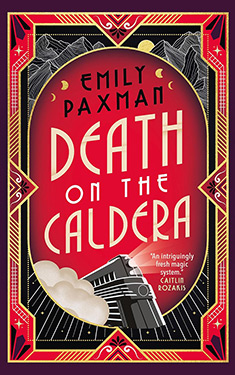
Death on the Caldera

Emily Paxman
Completed 5/12/2026, Reviewed 5/19/2026
3 stars

This was an in-person book club read from an author who spoke at WorldCon last year.  It’s described as Murder on the Orient Express with witches.  It sort of is, as it is a murder mystery that takes place on a train.  Gotta love those publishing houses that find it necessary to compare a new book to one or a cross between several classics.  I haven’t read Orient Express, though I’ve seen one of the films, so I can’t really compare, but it felt much different.  There was no master sleuth and there were way too many characters and suspects.  Taking it at face value, the book is good, not great, but a decent enough mystery to warrant further readings of this author.

Two brothers and a sister travel on a train to get back to their home country as their father, the king, lays dying.  Kellen, the eldest, will presumably take the throne upon their father’s death.  Being the eldest, he was estranged from his younger siblings, Morel and Davina.  At the beginning of the journey, their relationships are strained, particularly Davina, the self-absorbed youngest, who is violently antagonistic towards Kellen.  She wants to go away to university, but neither her father nor Kellen will permit it.  One night, the engine car explodes in a fireball and is shrouded in rock, derailing the train on the enormous volcanic caldera, a source of magic and reverence by all the nations living on this island continent.  All clues indicate the crash was caused by a witch.  The crash triggers Davina to change into her witch persona, something she did not know she had.  After changing back, she has no memory of the crash or the change.  Kellen has been withholding this info since their mother died when Davina was very young.  She is now fully enraged and resentful of not being told the truth.  In the meantime, survivors of the crash are slowly being killed off.  They blame a witch and set out to find out who among them is the witch.  Davina, now scared she may be the murderer, puts aside some of her rage to work with her brothers who lead the effort to find who the actual witch is.  Can they divert attention away from Davina long enough to find the culprit?

A few other details that are important to know about the plot.  The king and his family remain anonymous, not using their real names in public.  Legend has it that if the general public found out the identity of the royal family members, the main god would destroy humanity, worse than the last caldera eruption.  It turns out there is one person who knows the identity of one of the family.  That person ends up on the train as well.  

The toughest part of the book is reading the parts from Davina’s POV.  She is so spoiled and self-absorbed, I cringed through the whole beginning.  At the age of nineteen, she had no redeeming qualities.  Fortunately, the crash comes and the fear of being the killer witch and the effort of Kellen to protect her allays most of her resentments.  She almost becomes likable.  The best thing about her is that we learn the magic system of this world through her coming to grips with her witchhood.  The stress on her comes from the fact that another nation executes witches, despite the fact that they saved most of the people on the continent from the last major eruption of the caldera.  Without witches, everyone would have been wiped out.  Still, witches are at best under constant suspicion throughout the empire.  

At book club, a lot of people didn’t like Kellen.  They thought him the source of the family dysfunction.  Coming from a family that kept a lot of secrets, I didn’t blame him as much as the pressure put on him by his role as heir apparent and the promises he made to his mother.  I felt bad for him, thinking he was doing his best.  I also thought Morel was likeable as the one who helped raise Davina as best he could.  To his chagrin, she just didn’t turn out to be a nice person.  

There are many characters aboard the train, though quite a few die in the explosion.  Most of the survivors have secrets, like in any good mystery.  And of course, this being a rather Victorian setting, there are many fops and stuffy, titled people.  One such fop, Carey, was actually an endearing, but still suspicious character.  There’s Emeth, the religious acolyte who is uncomfortable in his own skin.  I liked eight-year-old Rae and her mother who were leaving their home under suspicious circumstances.  Rae seems to have an affinity towards witchy-ness.  

The mystery itself is pretty good as more survivors show up murdered.  And the digging into the history of witches and magic on the caldera is more fascinating than I expected.  I give this book three stars out of five.  The book could have used some serious proofreading.  There were many spelling mistakes and missing words.  All in all, not bad for a first novel.  I’d like to see where Paxman goes after this.  


Wednesday, May 27, 2026

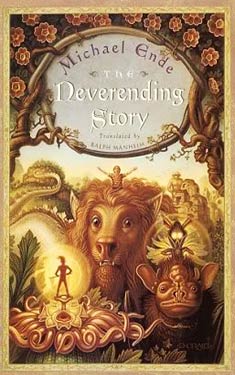
The Neverending Story

Michael Ende
Completed 5/22/2026, Reviewed 5/27/2026
4 stars

This is a tough book to review.  Many, many people have seen the ubiquitous 1980s film.  What most don’t know is that the film is just the first half of the book.  The second half is very dark.  It is about wanting to be someone else so much, you forget who you really are.  It is also a journey through grief, as the main character slowly forgets about his deceased mother and grieving father.  It’s so much deeper than what the film presented that it took me off guard, save for a warning from my friend John who had read it about five years ago.  I’ll do the best plot summary I can, although there will be some spoilers for the first half of the book.

Bastien is an overweight kid whose mother has passed away.  He is bullied at school.  His father, deep in grief, can barely function.  One day, he steals a fantasy book from a local bookstore and hides in the school attic instead of attending class.  As he reads the book, he finds himself strangely drawn to the story until it starts referring to him.  At first, he thinks he’s misreading it, but then realizes that he is supposed to be the savior of the dying land of Fantastica.  Eventually, he crosses through, saving Fantastica.  He is given an amulet that grants him wishes.  He tries to use it for good, but it often has strange, unexpected results.  On top of that, each time he uses it, he loses a bit of memory.  He begins a journey to find a way out of Fantastica, but begins to love his power more and more while he loses the memories of home, losing his desire to leave Fantastica.  So the big question of the book is not, “Can he save Fantastica from destruction?” but “Can he remember the desire to return home before all memory of home is gone?”

The book is strange.  Written in the late 70’s, it’s still very much an old-school boy’s imagination story.  Despite Atreyou being green in the book, he’s clearly modeled on Native Americans, wearing leather skins and hunting purple buffalo.  This recalls how boys like playing Cowboys and Indians.  The quest is to save the Childlike Empress (saving the princess).  If she dies, the whole land of Fantastica disappears.  Once inside the story, Bastien is thin and lithe, which he is not in the real world.  And then he has the power to wish for anything.  Who wouldn’t want that.  Upon reading the first half, I found I actually liked it better than the film.  It made a bit more sense to me.  

The second half, however, is the dark part.  Bastien begins his journey to leave Fantastica, but loses memories as he uses his wishes.  It reminded me of Wizard of Oz a bit.  Bastien travels to many strange lands, each dark in its own way, as he tries to find his way home.  One of the few points of relief comes in a scene with a warm old woman who feeds him and takes care of him for a while.  He’s clearly missing his mother, but has lost most of his memories of her.  It’s sad, but so gentle and safe after being in so many unsafe situations.   

There were also homages to Tolkien’s universe, as there is a dragon named Smerg (Smaug), and a country called Morgul (as in Minas Morgul).  I did groan when I read the name of Smerg.  In the second half, Atreyou and the air dragon Falkor try to remind Bastien of who he is, but Bastien snaps back, sounding more and more like Frodo falling under the power of the ring, snapping at Sam.  I’m sure there were references to other classic fantasy books, but I’m most familiar with the Tolkien stories.  

There was a part of me that only wanted to give this book three stars.  The second half is so dark, it’s almost a miserable experience to read.  I can see why many people gave this book low ratings.  This book was a book club read, so we discussed it last night.  Many people brough up things that made me think more deeply about the grief journey.  It helped me understand and appreciate it better.  It made me settle on awarding it four stars out of five.  Perhaps reading it again in the future, I might raise my rating, as it is deeper and more complex than what I gleaned initially.  I can see why the author was angry at the film version.  The first half is pure fairy tale.  But fairy tales always come with a catch and a message.  And that’s the significance of the second half.  It balances out the first and helps Bastien grow in the end.


Saturday, May 23, 2026

The Everlasting

Alix E. Harrow
Completed 5/18/2026, Reviewed 5/19/2026
4 stars

This 2026 Hugo nominee is an incredible time travel romance that begins with a crawl.  The first 140 pages or so dragged as Owen Mallory goes back in time to confirm the existence of the national hero, Una Everlasting.  Those first pages are rather dull during the character study of Owen, a mediocre historian with a passion for the Una Everlasting narrative, and his encounter with Vivien the new Chancellor.  But when he goes back a second time, and then a third, the book takes off with plot twists, Owen’s passion for not just the legend but Una herself, and the revelation of Vivien’s real reason for sending him back.  Upon finishing, I realized I was completely engrossed in the story and forgave the necessary drudgery of the first quarter of the book.

Owen was a pathetic man.  He’s estranged from his politically radical father and not very respected by his colleagues at university.  He was a deserter in the military and is a sheepish patriot.  He’s a lecturer and a researcher, not destined for professorial greatness.  Without warning, an ancient book appears in the mail which seems to be the earliest documentation of the Una Everlasting.  Shocked by this windfall, he begins translating it, only to have it disappear after a few days and be replaced by an address.  It turns out he is being summoned by the new Chancellor Vivien for a mission to confirm and complete the mysterious book.  Before he is clear on how to do that, she stabs his hand, his blood seeps on the book, and he is transported a thousand years in the past to the time of Una.  He realizes his mission is to make sure she completes the tasks ascribed to her legend, save the Queen, and die a heroic death.  But as he repeatedly is sent back in time, he and Una realize they can rewriter the tale so Una doesn’t die, but the cost may be Owen’s life.   

Owen does not make a great impression on the reader at the start of the book.  Between that and the seemingly meandering beginning, I did not like him.  When we find out he’s in love with Una, he becomes even more pathetic.  But then the repeated returns to the past changed my opinion of him.  Una, on the other hand, is one of the greatest knights to ever exist.  She lives in legend because her saving of the Queen and the realm, the Dominion, set the stage for the country’s control over the whole land.  But with each iteration of time travel, we find out more and more about the two as individuals, their pasts, and their relationship.  They become vibrant three-dimensional characters despite Owen’s lack of belief in himself.  I loved them even more as they worked to break the cycle of the repeating time travel.  

The magic is very interesting here.  It’s minimal, primarily being the time travel aspect.  Later, there’s a dragon and a magical grail that can restore health.  It takes a while, but the extent of the magic becomes clear towards the end.  Speaking of which, it is so full of twists and turns.  The bad guys show up over and over again to thwart any plans to allow Una to live.  And just when you think that Una and Owen have finally broken out of the time travel loop, they are again thwarted and doomed to start over.

The narration of the book was done very well.  When Owen is the narrator, he speaks in 2nd person referring to Una.  When Una narrates, she speaks in 2nd person referring to Owen.  It seemed clunky at first, but it endeared me to the two as the book went on.  It also reflects the growing relationship between them.  

This book felt like a big departure from Harrow’s previous books, The Once and Future Witches and The Ten Thousand Doors of January.  I loved those books and was disappointed at the beginning of this one.  But once the looping starts and we find out the extent of the time loops, you realize it’s a very powerful, well-constructed novel.  All the ins and outs are well thought out.  If I was trying to write this book, I’m sure I would have had a miserable time keeping track of everything.  But Harrow handles it flawlessly with masterful prose and world building.  I give this book four stars out of five, knocking off a star because I was fully expecting to DNF it in its first quarter.  I’m so glad I kept with it because it ended up blowing my mind.


Tuesday, May 19, 2026

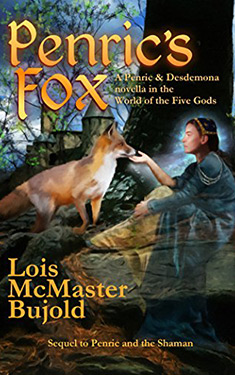
Penric’s Fox

Lois McMaster Bujold
Completed 5/14/2026, Reviewed 5/19/2026
3 stars

The third chronological book in the Penric and Desdemona series (fifth in publication order).  This story is a murder mystery with foxes.  Like its predecessors, it’s a rather cozy read.  It had a very slow start, but halfway through it picked up, making for a satisfying ending.  Unfortunately, I had the same basic feelings about this one as I did the previous two.  I like the characters but plot is thin.  And like Penric and the Shaman, there wasn’t enough interaction between Pen and his demon Des.  In the first book, Penric’s Demon, I loved their interaction.  In the succeeding books, Des occasionally pops up with interesting tidbits and hints.  Inglis the Shaman and Oswyl the Locator are in this book and provide more interplay as well as a little levity here and there.  

Penric and Inglis are called by Oswyl to help investigate the murder of a young sorceress.  She was devout and well-liked by many.  It turns out she already had a demon inhabiting her.  However, when the death of a sorcerer is expected, there is usually another chosen to become the demon’s new home.  In the case of the murder, the demon either entered the body of the murderer or a nearby animal, whatever was nearby.  For instance, a fox as there are tons of foxes in the woods where the sorceress was found.  There is a danger, however, when a demon bonds with a lesser animal.  The demon may overwhelm the animal and lose some of its “humanity.”  Penric and the others take up the challenge of finding the demon and the murderer.

Penric still stands out for me as the bookish, accidental sorcerer.  His demeanor is sweet; I really like him.  However, I still find the book to be awfully straight-forward.  There isn’t much tension to make the book gripping.  And there aren’t enough humorous moments to make it really cozy.  Instead, it feels a little flat.  I keep wanting to be blown away by something, but instead, feel like I get melodrama.  

I don’t have much else to say about the book.  It’s a pleasant read, prettily written in a world already developed by quite a few previous books.  It’s a meh, but on the positive side.  If I wasn’t reading this series with my friend John, I don’t know if I’d stick with it.  In the context of the book club, however, I look forward to finding out how deep the stories get and if I can become more emotionally involved.  I give this book three stars out of five.


Thursday, May 14, 2026

Shroud

Adrian Tchaikovsky
Completed 5/6/2026, Reviewed 5/6/2026
4 stars

This is another excellent book by Tchaikovsky.  Like Children of Time, it’s dense, perhaps denser.  The first few days, I could only read about twenty pages at a time before it felt too heavy.  It’s another tale of an encounter with aliens, this time on the moon of a gas giant in a distant solar system.  The moon is named Shroud because it has a densely clouded, toxic atmosphere, much like our Venus.  The pressure of its atmosphere is many times that of Earth and the gravity is twice Earth’s.  One would think it wouldn’t sustain life.  But when two people from a mining exploration ship are stranded on there, they must survive not only the 2g and high atmospheric pressure, but the creatures they discover living there.  This book was nominated for a 2026 Hugo for Best Novel.  

Juna is the assistant to the project director on board the ship.  Her task is basically to be the calm intermediary between the disparate personalities on the ship.  While the others write her off as little more than a secretary, she does most of the hard work the director takes credit for.  Also on board is Mai, a brilliant and confrontative engineer who doesn’t play well with others, like most of the rest of the crew.  When an accident occurs ripping open the project’s part of the ship, the two end up on a pod together and plummet to the moon’s surface.  They can’t communicate with their ship because of the dense atmosphere and the high amount of electromagnetic interference.  They can’t see much more than ten to fifteen feet because of the thick and obscuring atmosphere.  To survive, they realize they need to go halfway around the moon to get to the anchor that reaches up to the ship.  Monsters of various types are in their way.  The dominant monster is a strange slug-like thing encased in what appears to be a constructed exoskeleton.  Nicknamed the Shrouded, they continually try to take apart the pod, the only thing separating Juna and Mai from a certain crushing and toxic death.  The two must find a way to reach the anchor through these monsters if they are to survive.

This book is similar to “Children” in that after about a hundred pages, when Juna and Mai are stranded on Shroud, the chapters alternate between them and the monstrous aliens.  It’s a bit derivative, but the circumstances are very different.  In this case, the aliens’ main source of input and output is echolocation and electromagnetic waves.  None of the creatures, including the Shrouded, have eyes, since the atmosphere is obscured by clouds.  So communication between the humans and the Shrouded is non-existent, as neither understands how the other exists, let alone communicates.  

The human perspective chapters are narrated by Juna.  She’s quite the brilliant person for being relatively non-technical.  At first, she and Mai butt heads, but as time crawls, they learn to communicate with each other and figure out how to survive.  It took me quite a while to get inside Juna’s head due to the denseness of the prose.  I think I finally broke through once she and Mai were on better terms.  I actually related more to the Shrouded.  I think that was because of my general distaste for the humans in the beginning.  They were belligerent towards each other and quite xenophobic towards the Shrouded.  

The themes running in this book were xenophobia (naturally) and corporate greed.  Humans are in stasis on the spaceship until they’re needed, much like tools in a shed, and are treated as little more than that.  It also explores the problems with a very style of communication much different than humans and even the spiders from “Children.”  

This book requires a lot of concentration.  It’s not that technical, just, again, very dense in its prose.  The world building is phenomenal, as Tchaikovsky always is.  It’s because of the denseness as well as the similarity to “Children” that I give it less than 5 stars.  It gets four out of five.  I’m not sure how I’ll vote in the Hugos yet.  I have four more books to read.  Then I’ll see how this compares to the others.


Friday, May 8, 2026

400,000 Hits!!

Well, another six months have gone by and I've had another 100K hits on my blog.  Total: 400,000!! 


Big thanks to all who have visited and read my reviews.

I'm starting on the Hugos Nominees packet, so I'll be immersed in those books for the next three months.  I'll be voting in every category in which I can read or watch all the nominees.  So look for those reviews in upcoming posts.  The WorldCon this year is in Anaheim in August.  While there, I'll be getting to San Diego to visit an old roommate I haven't seen in 30, no wait, almost 40 years.  We're hoping to visit Joshua Tree National Park at that time.  Woohoo National Parks!!


I hope everyone who reads my blog finds a review or two that inspire them to read the books.  And remember, Reading is FUNdamental 😁

Wednesday, May 6, 2026

Role Model

Rachel Reid
Completed 4/48/2026, Reviewed 5/6/2026
4 stars

I am so loving these Heated Rivalry books.  Each one features a new couple with cameos from the characters of the other books.  The stories are all quick reads and soooooo romantic.  But they also deal with external and internal homophobia.  This one particularly focuses on the internalized homophobia of the main character Troy.  His coming out process is amazing to watch.  It’s slow and very frustrating at times, but that’s what makes the book so good.  Yes, it’s also spicy.  But I can see why fans are clamoring for a seventh book.  This one is the fifth in the series.  And it’s actually called the Game Changer series. 

Troy Barrett is the main character.  After an intense confrontation with his former best friend Dallas Kent, who has been accused of sexual crimes by women, Troy is traded to Ottawa, the worst team in the league.  Incidentally, it’s also where Ilya Rozanov plays.  However, most everyone in the league is against Troy because of the “bro-code” dismissing the women and supporting Dallas the perpetrator.  Except for his new team.  Unlike other teams, they have a camaraderie he’s never felt before.  Their coach also has a less abusive style, unlike most hockey coaches in the league.  He hates it all, though, and just wants to get through the season and try to get onto another team.  His plans all fall apart when he meets the team’s social media guy.  Harris Drover is very out and the team loves him.  Troy doesn’t get it, but he finds this slightly paunchy bear irresistible.  And Harris, who has kept his sexual relationships out of the locker room gets tons of mixed signals from Troy.  But Harris decides to make Troy his project and get him better integrated into the team.  And then…

I loved Harris.  He’s not a super-hot guy.  He’s a rather normal looking guy, which is a great change.  The problem with most M/M romance and romantasy books is that all the guys are stunners.  Not this time.  And not only does he manage the team’s online presence but is basically their cheerleader and best bud.  It’s a great relationship.  So it only makes sense that he makes a project out of Troy.  

Troy on the other hand, is a mess.  He feels isolated because many in the league hate him for what he did to Dallas.  Plus, he feels deeply guilty for all the gay slurs he used to cover up his own identity.  He doesn’t want to be a bro anymore but doesn’t know how not to be one.  Enter Harris.  And as time goes on, the signals between them get more and more mixed.  They become friends, but will there be benefits?

Ilya has some nice scenes with Troy.  Ilya is not publicly out at this point, but he does see the chemistry between Troy and Harris.  As the team captain, he takes it upon himself to give Troy advise and push him a little.  He also helps him feel a part of the team, as the captain should, giving Troy support and encouragement.  They are great scenes, showing a gentler side of Ilya that is rarely seen by the public.  

I thoroughly enjoyed this book, zipping through it in about two and a half days.  Once again, these books are not great literature, but they are so fun and so romantic, they simply suck me in.  I give this book four stars out of five.  It may be a while before I get to the sixth book as I now have all the Hugo nominees to get through before late July.  But I will get to it and report back, hopefully before season two of Heated Rivalry hits streaming.


Monday, April 27, 2026

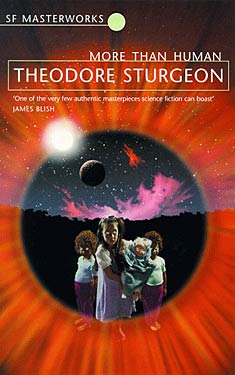
More Than Human

Theodore Sturgeon
Completed 4/26/2026, Reviewed 4/27/2026
4 stars

I first read this book in college.  I picked it up at a supermarket in their paperback section.  I thought it was brilliant.  After rereading nearly fifty years later, I still find it brilliant, but it wasn’t as earth-shattering.  Perhaps it’s because it was a reread, or perhaps I’ve been exposed to so much science fiction since then.  I love the basic theme of the next step in human evolution being communal and psychic.  However, I found some of the delivery tough to follow.  And of course, this being from the early fifties, it has some cringy stereotypical male/female behaviors.  Overall, though, I thought the inclusion of girls and boys, white and black persons, and the sentiment against inequality was great.  At a time when sci fi was read mostly by white boys and men, Sturgeon made a concerted effort to reach beyond that demographic.  This book came out in 1953, and it won a 2004 retro Hugo.

The story begins with a “half-wit,” basically, a person living on the street with no speaking ability and limited intellectual development.  He begins to get visions and messages from someone else, which he doesn’t understand.  Eventually, he meets this person and makes a connection.  That goes awry, forcing him to flee.  He finds a farm with a couple who have lost a child.  They take him in, treat him like the son they lost, teach him to speak, and to become their farmhand.  He accidentally takes the name of Lone.  When the couple becomes pregnant, he leaves and eventually finds a girl named Janie with telekinesis and mute twin girls named Bonnie and Beanie who teleport.  His own psychic abilities mesh with theirs.  Later, he goes back to the farm and finds the couple did have a baby boy, but it is mentally disabled.  The woman has left “to go east,” and the man is failing at keeping things together.  Lone takes the baby back to the cave where the little group lives and they discover the baby is like an adding machine, that is, a high-powered AI computer.  Together they form an entity that interacts psychically.  It is a new level of human development: Homo Gestalt.

The book is in three chapters, each like a related short story.  In the second chapter, they meet a boy named Gerry who can use all the gifts of the others to accomplish what he wants, namely, power and control.  His own gift is the ability to control other people’s psyche through power of suggestion, absorb everything they know, and wipe their memories to hide the evidence.  In the third chapter, they meet a man who can also psychically connect, but unlike the others, has a sense of morality and social ethics.

I remember being in awe of the coming together of a group of psionics to create a singular entity.  I still find it fascinating and generally found the book very intriguing until the third chapter.  Titled “Morality,” the first part of the third chapter is very hard to understand what’s going on.  The main character of this chapter is roaming around with a huge chunk of missing memory trying to find a “dimwit” and some children, but he can’t quite put his finger on who or why.  This section was incredibly complicated in trying to describe what he’s going through mentally.  And physically, he’s a mess.  It takes Janie to help him remember everything.  But then, like many early sci-fi stories, Janie goes through a huge exposition to explain all the events up to that point.  The saving grace is that the reader is so frustrated with the chaos of the main character’s thoughts or lack thereof, it comes as a welcome relief when Janie explains it all.  

The character development is pretty good.  The lumbering Lone is perhaps the easiest to like.  He’s sort of a gentle giant who is basically the head of this new psychic body.  Janie is brash, the twins are mischievous, and Baby is like a wild supercomputer.  Gerry is dangerous and we learn about him in flashbacks during a psychiatric appointment.  Hip Barrows, the main character of the third chapter is the most “normal.”

There are some memorable positive moments, such as when the group goes to live with Miss Alice, whom Lone knew from his past.  She tries to force the twin black girls to eat with her maid while the others eat with her.  Janie and Gerry threaten Alice until they are allowed to eat together.  On the other hand, like in several classic sci-fi stories, there’s a scene where Hip shakes Janie, as is also depicted in a lot of old books and films.  This is so cringy and it happens several times.  I felt this went against character for Janie who was such a brash and precocious young child.  I think it would have been more in character to have her throw off his arms and be more aggressive.  

I really like the prose, something I’ve said of the previous books of his I read about 10 to 12 years ago.  Godbody, Venus Plus X, and E Pluribus Unicorn are all very well written.  I give this book four stars out of five, mainly because the first part of chapter 3 felt almost unreadable because of Sturgeon’s portrayal of missing memory.  I’d like to read more of his short stories; an award for excellence in short fiction was named after Sturgeon.  I remember when he came to our Fantasy Lit class in 1981.  He read a story about a pleasuring toilet seat.  It was very bawdy, reminding me he was also a dirty old man.  But he was also a great writer and visionary, as this book demonstrates.

Thursday, April 23, 2026

Katabasis

R.F. Kuang
Completed 4/20/2026, Reviewed 4/22/2026
3 stars

I was so disappointed in this book.  I loved Kuang’s previous Babel, with its rich world building and prose.  I was expecting more of the same here.  Instead, the prose felt bloated, the world building tedious, and the plot buried under the main character’s constant brooding and dwelling on her fears and self-doubt.  The only parts of the book I enjoyed were the revelation of Alice’s part in the demise of their advisor and the exposition of her rival Peter’s background.  Katabasis is ancient Greek for a hero’s journey to the underworld.  With a title like that, I thought I would be enthralled.  Instead, I wanted to get out of the book as much as Alice and Peter wanted to get out of Hell.  This book was nominated for a 2025 Nebula and several smaller awards.  

The book begins with Alice, a graduate student in magick at Cambridge, rushing to cross into the Underworld to bring back her sadistic and morally reprehensible advisor, Professor Grimes, who died in a tragic magical accident.  Alice believes she was the cause and it is her duty to bring him back.  She’s interrupted by her rival Peter who has the same mission.  Together they travel through the different areas of Hell based on the Seven Deadly Sins.  Their only guides are the “accounts” of Dante, Orpheus, and other figures who supposedly traveled to and returned from Hell.  They encounter many different Shades, including some who help, some who deceive, and some who want to eat them.  

It was tough liking either Alice or Peter.  Alice’s reason for going to Cambridge and studying under Professor Grimes is that it will ensure her a job and success after school.  She’s obsessed with Grimes, basing her self-esteem and talent on his every word and action.  Everyone else is competition and everything else is a distraction.  Her biggest rival is Peter who also studies under Grimes.  Everything seems to come easily to him.  In the year leading up to the events of this book, she sees him usurping her position.  Grimes himself is a morally reprehensible slave driver with no regard for anyone else, including his students.  Alice takes it because of her obsession.  Peter seems to not mind Grimes, taking everything very casually and still landing himself on top.  So when he appears while she’s opening the portal to the underworld, she’s reluctant and resentful about letting him join her.  Through most of their time in Hell, they are at odds, despite Peter being most helpful and generous.

I tried to read Dante’s Inferno in high school on my own and was very lost.  I understand the basic concept of the book as well as Orpheus’ journey to bring Eurydice back from the underworld.  Alice and Peter refer to these and other tales during their journey.  But most of the time is spent in Alice’s head, hating and second-guessing Peter and recounting her relationship with Peter and Grimes up to that moment.  This was the part I disliked.  It was very repetitive.  My reaction was always, let’s just get on with the search for Grimes.  It didn’t help that Hell was mostly a wasteland with days and days of nothingness.  Even when they met Shades, good or bad, the action was constantly interrupted by Alice’s manic mind.  

The only parts I really liked were the chapters where we got the full concise disclosures of Peter’s past and Alice’s more recent disenfranchisement from Grimes.  They explained all the motivations and truths they both were hiding from each other.  However, this was not enough to make up for the first four hundred or so pages and didn’t make the last hundred and sixty any better.  

I thought the magick system was somewhat interesting.  Everything was based on chalk drawings of pentagrams, symbols, and magick words.  There’s even amusing references to the differences between brands of chalk and academic loyalty to each one.  The world building, however, was not interesting.  I quickly grew tired of the underworld.  The features like the river in which shades go to forget their previous lives and reincarnate, the reflection of the living world, the market, and even the eighth level home of Hades aka King Yama, all got tedious as the scenes progressed.  I simply could not get into it.

One other positive thing about the underworld was that it was mixed with the stories and myths of different cultures.  It wasn’t all Greco-Western.  It included some Chinese and other cultural myths as well.  

I give this book a very low three stars out of five.  Two stars implies bad.  It wasn’t bad, just very boring.  The prose is beautiful but dull.  The characters are very well developed though Alice is quite whiny, misguided, and not very likeable.  The Shades they meet in Hell are interesting.  And there’s a cool cat named Archimedes who pops in and out, occasionally helping them.  I’m not turned off by Kuang, though.  I hope to eventually read her Poppy Wars trilogy, which is supposed to be excellent.  


Thursday, April 16, 2026

Into the Void

Ronny Valtonen
Completed 4/11/2026, Reviewed 4/11/2026
2 stars

This was a tough book to review.  I know the author and this is his first work.  I like to give new, self-published authors the benefit of the doubt.  Unfortunately, this book is much like my own early attempts at writing, which I can look at with a more critical all these years later.  Valtonen chose a form that is difficult to be anything but exposition.  It’s the journal of the commanding officer of a mission to find a new habitable planet for humankind.  A lot happens on the trip, but there are no real details.  As one would expect in a journal, it’s just the highlights.  I never felt much empathy with the characters.  Instead, it just felt like a manifesto for an idealistic search for a new home rather than a work of fiction.

The crew consists of four members: Jonathan the commander, Jebidiah the security officer, Ellie the scientist, and Polly the photographer and documenter.  They are on a five-year mission to Proxima Centauri B, the most likely candidate for a new home.  On the planet they find ruins that contain a portal.  They opt to go through the portal and meet a race of beings that are far more advanced than humans.  They offer the crew the opportunity to travel farther in their search for the best planet to homestead.  This takes them up to a place known as the Void, where physics fails and new insights into the universe and its inhabitants are revealed.  

These journal entries were all about telling, not showing.  They were all recaps of what had happened aboard the ship.  There is almost no dialogue, no details of the characters’ interactions.  The entries are pretty strictly reports, not recounts.  It made for tiresome reading.  Jonathan praised the characters almost completely throughout.  There was almost no conflict.  The closest we get is that Jeb and Polly try to have a secret relationship which everyone figures out, and then Polly gets pregnant.  Even when the crew meets the extraterrestrials, everything goes super smoothly.  The crew does have differing opinions on things but always comes to a level-headed consensus.  

I also noticed issues a proofreader could have caught.  For example, some measurements are given in metric, others in imperial units.  I was also confused by the speed of light usage.  They were supposedly traveling at 5c, which would be five times the speed of light.  With Proxima Centauri B being about five light-years away, it should only have taken them about a year.  Valtonen throws in some calculations that are little suspect as well.  I didn’t do the math myself, but it seemed like there was some confusion of kilometers/hour versus miles/hour and the value of c as well, either 3 x 10⁸ m/s versus 186,000 mi/s.  Finally, there’s the matter of time dilation.  Valtonen says that it was disproven in 2019.  However, I remember reports that experiments have proven relativity several times since the seventies.  Without time dilation or delay, they are able to communicate instantaneously with Earth most of their trip, like with an ansible.  But, I guess use of an ansible implies faster-than-light communication, which implies general relativity is still in effect, which contradicts the 2019 assertion.  

I think Valtonen could also have used a good editor to help flesh out the characters, adding more humanity, checking for continuity, and flagging hyperbole.  Once the crew make it to the Void, you get the sense that all they do is gaze in awe at their surroundings.  There are no descriptions of what they saw.  Then, Ellie does lots of interacting with the extraterrestrials and analysis of data input from their surroundings.  Polly takes a lot of pictures.  Jeb watches for everyone’s safety.  

When the crew finds the perfect habitable planet, it seems that there are already settlers for the planet.  So either I missed the description of the ship as carrying a chunk of humanity, or they arrived very soon after.  There’s a second wave of settlers as well, but the journal entries only cover about nine months.  So one would have to assume that the extraterrestrials taught us an even faster form of travel.  

My last big criticism is the handling of Polly’s pregnancy.  There’s no mention of any of the common issues she should be experiencing, like morning sickness, mood swings, swollen feet, and frequent urination.  In fact, we don’t hear about it again until the baby’s birth.  Then, there’s no mention of Polly being okay when the birth takes place.  She’s not mentioned again until two entries later, and then it’s about her work on the mission.  

I give this book two stars out of five.  I try to go easy on new authors, but this was the best I could do.  What I can say is that Valtonen has a marvelous vision for and faith in the goodness of humankind.  This could have been a terrific novel with more writing experience, beta readers, and a good editor.  I realize these are luxuries for the beginner indie writer.  But I believe he would find a lot of value and grow as a writer with this outside input.  I have his second novella, the sequel to this one.  I’m still going to read it because I believe indie authors have something to say, even if it’s rough at first.


Monday, April 6, 2026

Tournament Mage

Michael Taggart
Completed 4/6/2026, Reviewed 4/6/026
4 stars

Here’s another long series I’ve returned to, the Fledgling God series.  It began with Misfit Mage and ended with a little cliffhanger in Buried Mage.  It continues the story of Jason, the former professional gambler who now lives in a house of Mages in Louisville as he learns the ins and outs of being a Mage.  Once again, the world building is simply magnificent.  Taggart goes into tons of detail with the magic system and Jason’s ongoing training in it.  The main characters are often too good to be true, but it stresses found family and the love and support they provide each other.  The book contains a little spice, so this book is not for everyone.  But it’s not just an excuse for a full-on M/M romantasy; the emphasis of the book is on the magic, the character development, and the family that has evolved in the Louisville House.  

This book begins right at the end of the last book.  Just when Jason and the rest of the family return home from their latest adventure, they are greeted by a bank auditor who claims they owe three million pearls for all the cleaning of magical evidence needed after the battles the family had to deal with.  The bank is one of the oldest magical organizations in the world and not one to be trifled with.  However, Annabeth uses her magic to soften the auditor and help convince him they are not just a new house with two green first-year mages (Jason and Annabeth), but a tight family with some very gifted mages.  The auditor realizes that rather than put the mages into indentured servitude to pay off the debt, he can enter them in the big upcoming tournament which has a huge first prize.  The rest can be made from sponsorship income once the world of mages realizes how powerful Jason and Annabeth are.  He also tasks them with trying to find out more about the sudden popularity of something called Paths which groups of mages are incorporating into their practices.  

The whole family goes to the tourney but only Jason and Annabeth can compete.  They quickly discover that mage houses are looked down upon compared to the elite schools.  So the family must battle prejudice and hostility from the other contestants.  Once the first round begins, they realize their tasks are like an RPG (no doubt inspired by the rise in LitRPG books like Dungeon Crawler Carl).  J and A make it through the first level but are docked over 7000 points because they helped dozens of other teams evade the giant orcs and make it safely out of the first level.  They find out that their penalty comes mainly from a mage with a giant grudge against “house rats” and has powerful influence over the judges.  Starting with a massive point deficit, J and A begin the immensely more difficult second level.

That was a long plot summary for a long book.  And at over seven hundred pages, this doorstopper is only the first half of the Tournament.  Taggart spends a lot of time explaining how Jason absorbs, adapts, and incorporates new magic into his existing structure.  Jason is very puzzle oriented.  He is constantly working and reworking how he stores and access magic.  He also enhances his weapons which are primarily, his fists.  He shares this with Annabeth as well, helping refine her powers and weapons.  I have to say that for the first time, this became a little tedious in the middle when the two were fighting the giant, crazed, red-eyed ants.  The detail is amazing but went on a little too long as they encountered more and more powerful ants.  I plowed through most of the book, except for this section.  It took me about three days to get through battles with different levels of ants, reading only about twenty pages at time.  Happily, the book picks up again and the ending is terrific.  

The main characters are so sweet, it’s tough not to love them despite the Mary Sue characterization of Jason.  When the family decides to enter the tournament to save the house, it reminded me a little of a Brady Bunch episode.  There is a lot of hugging and cheeriness throughout the book which seemed excessive at first, but I guess I got caught up in the positive vibe they exuded.  I found myself looking forward to the hugs and words of support.  

Annabeth is wonderful.  She’s a seventy-year-old grandma who is a first-year mage developing into an incredible fighter.  Her magic is based on sound.  She uses music and her voice to enhance her fighting.  This comes in handy when she is blinded by Jason’s overzealous healing constructs.  Speaking of constructs, I love how they all had personalities of their own.  They range from the ones Jason makes to the attendants and servers at the tournament.  Even the Bank Crystal, which is Jason’s connection to the mage bank, has a personality with which Jason develops a relationship to enhance its assistance.  

And of course, there’s the cat.  Bermuda is a magical companion.  He has special powers but only comes to Jason’s aid when he feels like it.  After all, Bermuda is a cat.  He doesn’t speak like Princess Donut in Dungeon Crawler Carl, but he’s definitely an active participant in the story.  

I give this book four stars out of five.  I was completely engrossed in it, except during the last few ant chapters.  If they were a little shorter, maybe edited a little tighter, I think I could have given this book five stars.  It’s not great literature, but it is so much fun and the magic system so amazingly detailed, it’s easy to overlook its shortcomings.  This book was released in 2024, so I was hoping book six would be released this year.  Unfortunately, the author has life happening and is struggling to find time to finish it.  This is a self-published series and Taggart has a full-time job and other life duties.  I hope things lighten up for him because I can’t wait to read what else he can come up with.  


Friday, April 3, 2026

Redneck Revenant

David R. Slayton
Completed 3/31/2026, Reviewed 4/3/2026
4 stars

I was worried that it had been almost three years since I read Deadbeat Druid, the third book in the Adam Binder Novels.  I was also worried that this book was an afterthought since Druid had such a climactic ending.  Instead, I melted into it like it had just been yesterday.  Yes, I forgot a couple of the details and secondary characters, but within fifty pages I was right back in this universe, excited to be reacquainted with Adam and his boyfriend Vic.  This has become one of my favorite series, mostly because of how sweet Adam and Vic’s relationship is.  I also liked the side series in this universe that began with Rogue Community College and can’t wait for the next book to come out.  The original three volume Adam Binder series, which began with White Trash Warlock, was nominated for a 2024 Mythopoeic Award.

Adam lives in his brother Bobby’s basement where Vic often spends the night.  On Halloween night, after all the kids have stopped trick-or-treating, Bobby’s wife Annie, who died in book one, appears on their doorstep.  Alarmed, they don’t know if this is really Annie brought back to life or if she is walking-dead or some other dark magic.  They invite her in and ask questions but get no resolution.  Bobby comes home and is equally flabbergasted, not know how to feel after grieving for so long.  Adam sets out to solve this mystery, going to the Faerie King, Death’s daughter, and others to figure out who or what’s behind this.  Adam also learns that some young witches from his niece’s coven have gone suddenly missing.  Then Annie’s rich, controlling, and emotionally distant parents show up, confirm that Annie’s been alive all this time, and try to take her home with them.  For the love of his brother and the safety of all the magical people in his life, Adam tries to get to the bottom of the mystery of Annie’s return.

I really enjoyed this book despite it being so long since the last one.   It’s not a cozy mystery/fantasy, but it felt that way.  Just being back in the Adam Binder universe felt wonderful.  I appreciated Slayton’s memory jogs of the past plots and other characters’ relationships with Adam minus large info dumps.  He even brought in characters from Rogue Community College with reminders of who they were.  It made for a very rich story and a good jumping off place for restarting after the crazy ending of Druid.  

I just love Adam.  He’s still broken, but he’s gaining more confidence.  His boyfriend Vic calls him out on his low self-esteem.  “Adam, do you know what a self-sacrificing narcissist is?” “I’m guessing me?  Is that my diagnosis?”  “No.  Though you’re a level five smart ass…it’s someone who puts the needs of others ahead of theirs to avoid dealing with their own issues.”  Adam realizes this and slowly starts to examine his own avoidance of marrying Vic and finding their own place by trying to save the world.  It’s a profound moment in the book and a gut punch into my own belief that Adam is angelically selfless.  In reality, he’s trying avoid the tough issues in his life, thus hurting the people he loves.  This metanoia made me love him and Vic even more.

I liked how this book went back to being told just from Adam’s perspective.  I missed being in his head.  I expect Slayton will change it up in future volumes.  That’s fine, because I love Vic’s journey as well.  From closeted cop to out bisexual chef to Grim Reaper, Vic has grown a lot in the three years that transpired since the first book.  And his mom is a hoot, a Latina history professor who supports her son despite not allowing them to sleep together under her roof until they are married.  I love how she constantly needles Adam about getting a degree.  “Vic feigned interest, because he’d had a lifetime of it, but for Adam it was a wonder to spend time with a parent who wanted to talk about that sort of thing, who had something to say about a world greater than her corner of Oklahoma.” 

I give this book four stars out of five.  It reminded me of why I love Slayton’s storytelling and imagination.  The world building, between Denver and the Faerie realm, is still wonderful.  I lament that it may be a while before getting another Adam book since Slayton has the Rogue CC series going as well as a separate series, which I haven’t started yet.  But I’m glad for all of them. 


Sunday, March 29, 2026

The Wolf and His King

Finn Longman
Completed 3/25/2026, Reviewed 3/29/2026
4 stars

This book is a queer retelling of the twelfth-century tale of Bisclavret the werewolf.  I had no knowledge of this legend but still enjoyed the book.  It is a well written tale of love, betrayal, isolation, and fealty.  Like many of the books I’ve been reading lately, the big conflict in this book is hiding truth out of fear.  In this case, it’s Bisclavret’s “wolf sickness.”  The prose is wondrous and the character development was excellent.  Longman made an interesting choice by only naming Bisclavret.  All the other characters are known only by their relationships to each other.  I still don’t know how I feel about that choice, but I did enjoy the book.  

Bisclavret’s father was lord in the kingdom.  When he died while his wife was pregnant with Bisclavret, his land reverted to the King since he had no male heir.  Bisclavret and his mother lived on a small cottage on the far end of the property that they were allowed to keep.  They had almost no interaction with anyone lest the secret of the wolf sickness be revealed.  Years later, the King has died and his son, the quasi-exiled Prince, ascends the throne.  Bisclavret’s cousin convinces him that he must go to the capital to pledge fealty to the new King.  (I’ll abbreviate the main character’s name to B going forward) B is reluctant because he has no control over his wolf sickness.  His cousin assures him that he will take care of him.  He also advises B that he may be able to ask for his father’s lands back as the male heir.  B reluctantly goes.  There he captures the fancy of the new King who can relate to being more or less exiled from the rest of the kingdom.  Not only does the King restore B’s lands but also makes him a knight after seeing B’s fighting prowess.  The cousin becomes the manager of the lands.  Then B suddenly disappears and the King is fraught with fear, despair, and disappointment until one day, an unusual wolf tamely befriends the King.  

Again, I didn’t know the original story, but I found this retelling exciting and engaging.  B’s disappearance made me reflect on my own embarrassment for ghosting people because I was afraid of what they would think of me if I revealed who I really was.  Whether it’s being gay, being depressed, being afraid, I found it easier to run rather than be honest.  It takes courage to be authentic.  This book did an excellent job of using metaphor to express this concept.

I also liked the unrequited love theme.  The new King falls for B and wants to do everything he can to keep him around.  B sees this to some extent, but does not acknowledge the King’s feelings, nor has the wherewithal to acknowledge it or any sense of love in himself.  When the “tame” wolf appears and the King senses it is pledging fealty to him, it broke my heart.  

There’s also a kink in the story where the King’s Ward, a young woman about B and the King’s age, declares love for B.  The courtship is odd.  B sees it more as duty than as love.  The Ward is insistent in her feelings, and the King had always promised he’d respect her right to marry who she chooses.  However, this is what precipitates B’s disappearance which throws everyone into chaos.  

Longman did an excellent job of developing believable characters in B, the King, the Ward, and the cousin.  I was completely sucked into the story.  My only complaint is that once again, the fatal flaw of the protagonist is fear of being honest.  It has appeared in so many stories I’ve read recently, including the gay hockey romances.  I’m beginning to grow tired of it, but it is pervasive throughout literature, and not just in romances.  I guess at my age, I’ve come to realize life is too short to be afraid to be authentic.  Books like this reaffirm that belief.  I give this book four stars out of five.


Wednesday, March 25, 2026

Carl’s Doomsday Scenario

Matt Dinneman
Completed 3/22/2026, Reviewed 3/23/2026
4 stars

This is the second book in the Dungeon Crawler Carl series.  I enjoyed this book thoroughly.  However, it didn’t feel as original and exciting as the first book.  I expected that there would be a sort of sophomore slump with the second book.  These novels appeared online, similar to The Martian, and were published traditionally after developing a huge following.  So sophomore slump may be a misnomer.  Instead, maybe I can say that the author settled into a groove.  The story is still fast paced and exciting with a doomsday scenario for a climax.  But I know now it’s about settling in for the ride.

This book takes place on level three.  Everything is more challenging and there is much more room for getting killed.  Carl, still running around barefoot, in boxers and a one sleeved bomber jacket, is accompanied by Princess Donut, the talking cat, and her pet dino raptor, Mongo.  Because of the race and class Donut chose, their advisor, Mordecai, has become their manager.  Now they have much more information and guidance about the dungeon and their options.  In this book, they are sidetracked by side quests.  One involves a terrifying circus, another, the disappearance of sex workers.  There is still a lot of violence and gore, as one would expect in a DnD game, but also compassion exhibited by Carl and Donut towards the NPCs who were changed into terrifying clowns as well as the women who were forced into sex work.  Mordecai tries to keep the team from accepting these side quests, but their conscience gets the better of them.  Since they’ve leveled up, their stats are better and their weapons more effective.  But the scenario still requires the finesse of Carl and Donut to complete their quests without causing massive loss of life of the NPCs and the other crawlers.

This description makes the book sound more somber.  It really isn’t, as the first book was also full of moral questions Carl asks concerning the humans and the others who are dying in this game.  It is still a lot of fun but never loses sight of its humanity.  One of my favorite lines in the book is towards the end where Carl thinks, “And now that I had a moment to breath, my heart couldn’t stop pounding.  I found myself sitting on the bathroom floor, my hand to my chest.  How is this real?  How is this my life?”   So poignant!

The big character development here is with Princess Donut.  She becomes more aware of the moral issues involved and the reality of their situation.  She learns about caring for a pet with Mongo, who is an adorable menace, and helps Carl make tough decisions with a more humane perspective.  

Mordecai, on the other hand, remains somewhat of an enigma.  As an incubus, Mordecai can’t handle alcohol but goes on binges anyway.  He is very knowledgeable about the dungeon but carries the scars of having been a crawler himself.  He doesn’t make the best decisions for himself but does for Carl and Donut.  He gives them insight not only into the game, but also the galactic corporations who are controlling the strings and the effect Carl and Donut have on the media.  

I give this book four stars out of five.  The newness has worn off, but the enjoyment hasn’t.  I’m looking forward to seeing how Dinneman keeps the story fresh through all the dungeon levels.